
Views: 0 Author: Site Editor Publish Time: 2026-11-13 Origin: Site


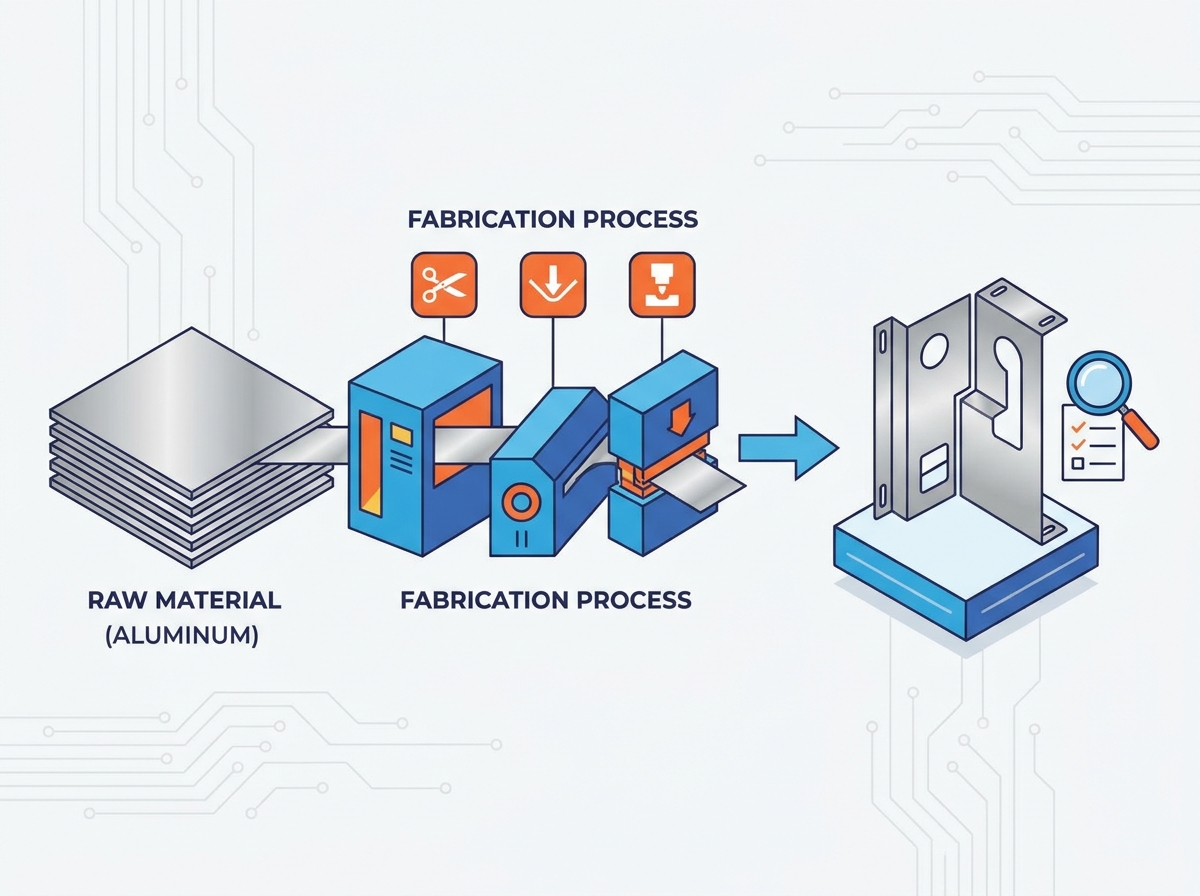
Aluminum sheet metal fabrication transforms flat aluminum sheets into functional parts through cutting, bending, joining, and surface finishing. It is widely used for equipment enclosures, brackets, control cabinets, and other lightweight metal components.
Choosing the right alloy and fabrication method affects strength, corrosion resistance, dimensional accuracy, and production cost. Design decisions also influence bending quality, weld distortion, fastener performance, and final assembly.
This guide explains how to select aluminum alloys, compare common fabrication processes, apply design for manufacturability (DFM) principles, and evaluate fabrication suppliers. These considerations help engineers and procurement teams prepare practical designs and reduce avoidable production risks.
Table of Contents
Aluminum alloys differ in strength, formability, corrosion resistance, weldability, and cost. The best choice depends on the part's load requirements, geometry, operating environment, and fabrication process.
5052-H32 is commonly used for sheet metal parts that require bending and corrosion resistance. Its magnesium content contributes to its strength and performance in many outdoor and marine environments.
It is often suitable for enclosures, brackets, panels, and equipment housings. Compared with 6061-T6, 5052-H32 is generally easier to form into sheet metal shapes. However, the achievable bend radius still depends on material thickness, bend direction, tooling, and part geometry.
6061-T6 offers relatively high strength and good machinability. It is used in structural components, frames, and machined parts where strength and weight matter.
However, its T6 temper can make tight-radius sheet metal bending more difficult. Cracking risk depends on thickness, bend radius, grain direction, and forming conditions. Where significant bending is required, consider whether another alloy or a different temper is more suitable. Forming in a softer temper followed by heat treatment may be possible, but it adds process complexity and cost.
3003-H14 is known for good formability and corrosion resistance. It is commonly considered for general sheet metal work, covers, tanks, and parts that require extensive forming without high structural strength.
It may be a practical option when complex shapes and manufacturing efficiency matter more than maximum strength. Confirm compatibility with the operating environment and joining requirements before finalizing the material.
5083 offers high strength among non-heat-treatable aluminum alloys and good resistance to seawater corrosion. It is used in marine structures and other demanding applications.
Weldability is an important advantage, but welding can change the properties of the heat-affected zone. Do not assume that welded areas retain the full properties of the original temper. For load-bearing structures, assess the design, welding procedure, and applicable engineering requirements.
Alloy | Main Advantages | Forming Considerations | Common Applications |
|---|---|---|---|
3003-H14 | Good formability and corrosion resistance | Suitable for many formed parts; confirm strength requirements | Covers, tanks, general sheet metal parts |
5052-H32 | Good formability and corrosion resistance | Bend radius depends on thickness, tooling, and grain direction | Enclosures, brackets, panels |
5083-H321 | High strength and marine corrosion resistance | Consider welded-joint and heat-affected-zone properties | Marine structures, welded assemblies |
6061-T6 | Relatively high strength and good machinability | Tight bends may increase cracking risk | Frames, structural parts, machined components |
These comparisons are general guidance rather than a substitute for material specifications. Confirm the required alloy, temper, thickness, and mechanical properties before production.
Each fabrication process affects part geometry, edge quality, production speed, and cost. The most suitable method depends on material thickness, design complexity, quantity, and required tolerances.
View DINGPRECISION's sheet metal fabrication services to review its core manufacturing processes.
Fiber laser cutting is suitable for many aluminum sheet metal profiles and complex two-dimensional shapes. Its performance depends on laser power, material thickness, alloy, surface condition, and cutting parameters. Edge quality and secondary finishing requirements should be confirmed for the specific application.
Waterjet cutting uses a high-pressure abrasive stream and does not create a conventional heat-affected zone. It can be useful when thermal effects must be minimized or when processing thicker material. Cutting speed, edge quality, and operating cost should be compared with alternative methods.
CNC punching is useful for repeated hole patterns and features such as louvers. It can be efficient for suitable designs and production volumes, although tooling, feature geometry, and material deformation must be considered.
Process | Key Strength | Important Considerations |
|---|---|---|
Fiber laser cutting | Flexible cutting of complex profiles | Reflectivity, material thickness, edge quality, and machine capability |
Waterjet cutting | No conventional heat-affected zone | Cutting speed, abrasive use, edge finish, and operating cost |
CNC punching | Efficient for repeated features | Tooling cost, hole geometry, spacing, and local deformation |
There is no universal thickness limit for each process. Ask the fabrication supplier to confirm achievable thickness, tolerances, and edge quality for your specific alloy and part design.

Press brake forming converts flat aluminum blanks into three-dimensional parts. After the bending force is released, the material may partially recover toward its original shape. This is known as springback.
The amount of springback depends on the alloy, temper, thickness, bend radius, tooling, and bend angle. CNC press brakes and suitable tooling can help control the final angle, but prototype bends may still be necessary for demanding parts.
Consistent bend radii can simplify tooling and improve repeatability. Where a design includes several different radii or short flanges, discuss the geometry with the fabricator before releasing production drawings.
Aluminum welding requires careful control because aluminum conducts heat rapidly and develops a surface oxide layer. Poor process control can cause distortion, porosity, burn-through, or inconsistent weld quality.
TIG welding is often selected for controlled, precise welds. MIG welding can be suitable for higher deposition rates and many production assemblies. The appropriate process depends on alloy, thickness, joint design, appearance requirements, and production volume.
Welding may also change the properties of the heat-affected zone. For critical structures, define the joint requirements and inspection criteria before production, and use a suitable welding procedure.

Rivets and structural adhesives can join aluminum parts without introducing welding heat. They are useful when thermal distortion must be minimized or when joining different materials.
Riveted joints require suitable overlap, hole alignment, and fastener selection. Adhesive bonding requires compatible surface preparation, controlled application, and curing conditions. The joint design should account for service loads, vibration, moisture, temperature, and maintenance needs.
Thin aluminum sheets may not provide enough thread engagement for some load-bearing or frequently serviced connections. Direct tapping can be appropriate in some designs, but thread strength must be checked against material thickness and load requirements.
Self-clinching nuts, studs, and standoffs are common options for sheet metal assemblies. They require compatible sheet thickness, correctly sized holes, suitable edge distances, and proper installation force. Rivet nuts or other threaded inserts may be alternatives depending on access and design constraints.
Design for manufacturability helps engineers avoid defects and unnecessary costs before production starts. For aluminum sheet metal parts, the most important considerations include grain direction, bend radii, hole locations, distortion control, and surface protection.
Rolling creates a preferred grain direction in sheet metal. Bend performance can vary depending on whether the bend line runs parallel or perpendicular to that direction.
For alloys and tempers that are sensitive to bending, orienting bends across the grain may reduce cracking risk. The correct orientation still depends on the material specification, thickness, and required bend radius. Indicate grain direction on drawings when it affects part quality.
A bend radius that is too small can cause cracking on the outside surface of an aluminum bend. The minimum acceptable radius depends on alloy, temper, thickness, grain direction, and tooling.
Use material-specific bend-radius data and the fabrication supplier's tooling recommendations instead of relying on one universal multiplier. This is especially important for 6061-T6 and other conditions that may be less tolerant of tight bends.
Holes placed too close to a bend can become distorted during forming. Their final position and shape may also affect fastener fit and assembly accuracy.
Maintain sufficient distance between holes, bend lines, and part edges. The required spacing depends on hole size, material thickness, bend geometry, tooling, and the intended function of the feature. Confirm critical dimensions with the fabricator and include them in the inspection plan.
Cutting, forming, and welding can introduce distortion or residual stress. Long, thin, or asymmetrical parts may be especially sensitive.
Where possible, use balanced designs and suitable fixturing. Welding sequence, weld length, heat input, and assembly restraint can influence distortion. Discuss critical flatness and alignment requirements before production rather than relying on corrective work afterward.
Aluminum surfaces can be scratched or marked during cutting, forming, handling, and assembly. Protective film may help on suitable sheet products, but its compatibility with the cutting and finishing processes must be confirmed.
Specify cosmetic surfaces and handling requirements on the drawing. Define which areas may show tooling marks, weld marks, or other process-related features, and which areas require protection or masking.
Finishing affects corrosion resistance, appearance, wear performance, and electrical properties. It can also affect final dimensions, so finishing requirements should be considered during design.

Anodizing forms a controlled oxide layer on aluminum. Type II anodizing is commonly used for corrosion protection and decorative finishes. Type III hardcoat anodizing is generally selected when greater wear resistance is required.
The coating's thickness, growth, and penetration depend on the process and specification. Do not assume a fixed dimensional change for every anodized part. For tight-tolerance assemblies, confirm the expected coating buildup with the finishing supplier and include it in the dimensional plan.
Powder coating provides a durable colored finish for many enclosures and structural components. Masking may be needed where electrical grounding, threaded connections, or close-fitting surfaces must remain free of coating.
Chemical conversion coatings can provide corrosion protection and may support paint adhesion or electrical-contact requirements, depending on the coating system. Confirm the required specification and performance with the supplier, especially when the part must meet industry or customer standards.
Brushing can create a consistent directional appearance, while deburring removes sharp edges and loose material. Tumbling may be suitable for smaller parts where part geometry and cosmetic requirements allow it.
Define the required finish, edge condition, and visible surfaces in the drawing or purchase specification. Clear requirements reduce interpretation differences between production batches.
The total cost of aluminum sheet metal fabrication includes more than raw material. Cutting time, forming complexity, joining, finishing, inspection, scrap, and packaging can all affect the final quote.
Laser cutting and CNC bending are often practical for prototypes and low-volume runs because they can reduce the need for dedicated hard tooling. Actual costs depend on setup time, programming, part complexity, and the number of operations.
For stable, high-volume demand, stamping or dedicated tooling may reduce cycle time and unit cost. However, tooling investment, design changes, and forecast volume must be evaluated before switching processes.
Part layout affects how much usable material comes from each sheet. Efficient nesting can reduce scrap, especially when many parts share the same material and thickness.
Design constraints, grain direction, cosmetic surfaces, and part orientation may limit nesting options. Work with the fabricator to balance material utilization with forming, finishing, and quality requirements.
Each machine setup and tool change can add time to a production run. Standardizing bend radii and using consistent hardware can simplify production where the design allows it.
For repeat orders, consider whether dedicated fixtures or custom tooling can reduce cycle time and improve consistency. Compare the initial investment with the expected production volume and product lifecycle.
A suitable fabrication partner should demonstrate experience with the required alloy, processes, tolerances, finish, and production volume. Evaluate actual capability and documented controls rather than relying on general claims.
Ask which operations the supplier performs in-house and which are subcontracted. Relevant capabilities may include laser cutting, CNC bending, welding, punching, hardware insertion, and surface finishing.
Check certifications against your project's requirements. ISO 9001 may be relevant for quality management, while AS9100 or specific welding qualifications may be necessary for certain aerospace, defense, or structural applications. These requirements should be based on applicable regulations, customer specifications, and contract terms.
DINGPRECISION describes its sheet metal processing, CNC bending, welding, and surface treatment services on its official services page.
Agree on inspection requirements before production. Depending on part criticality, this may include dimensional inspection, first-article reports, weld inspection, coating-thickness checks, or material certificates.
Coordinate Measuring Machines (CMMs) can support complex dimensional inspections, but the appropriate method depends on the part geometry, tolerance, and measurement plan. Request material test reports or other traceability documents when required by the specification or contract.
For more information about dimensional requirements, review DINGPRECISION's precision sheet metal tolerances guide.
In-house processing can simplify communication and coordination across cutting, bending, welding, and coating. Subcontracting may still be appropriate for specialized treatments or tests, but it should be managed through clear specifications, lead-time planning, and quality controls.
Ask how the supplier controls outsourced operations, handles nonconforming parts, and maintains traceability between production stages.
For a broader supplier evaluation framework, see this guide to choosing a sheet metal fabrication supplier.
Successful aluminum sheet metal fabrication starts with selecting an alloy that matches the part's mechanical and environmental requirements. The design must also account for bend radii, grain direction, hole placement, joining methods, and finishing-related dimensional changes.
Before releasing production drawings, confirm critical tolerances and process limits with the fabricator. Evaluate supplier capabilities, inspection plans, and material traceability against the project's actual requirements.
If you are developing a custom aluminum component, share your drawings, material specification, expected quantity, and finishing requirements with the fabrication team. You can contact DINGPRECISION to discuss project requirements and manufacturing options.
The best alloy depends on the part's strength, formability, corrosion resistance, and operating environment. 5052-H32 is often suitable for formed panels and enclosures, while 3003-H14 is useful for many general forming applications. 6061-T6 may suit higher-strength parts but can be more challenging to bend.
Cracking can result from an unsuitable bend radius, sensitive alloy or temper, grain direction, material thickness, or tooling setup. Confirm the minimum bend radius using material-specific data and the fabrication supplier's recommendations.
Yes. Fiber laser cutting is widely used for aluminum sheet metal profiles. The achievable thickness, edge quality, and tolerances depend on the alloy, material thickness, machine configuration, and cutting parameters.
The choice depends on joint strength, sealing, appearance, thermal distortion, service conditions, and whether the assembly needs to be disassembled. Welding can create permanent joints but introduces heat; riveting avoids welding heat but requires suitable joint geometry and fastener selection.
Achievable tolerances depend on the process, part geometry, material thickness, equipment, and inspection method. Specify critical dimensions and functional requirements on the drawing, then confirm the achievable tolerances with the fabrication supplier before production.
Request a Custom IP-Rated Enclosure Quote
Phone: +1 0757-26630312
Email: niewenhui@dingprecision.com
Website: www.dingprecision.com


