
Views: 0 Author: Site Editor Publish Time: 2026-07-30 Origin: Site


Industrial finishing dictates product lifespan, warranty liabilities, and brand perception in the field. Manufacturers and OEMs face a complex trade-off when selecting a finishing process. Choosing the wrong method leads to production bottlenecks, premature corrosion, environmental compliance fines, and inflated unit production times. This guide provides an objective, engineering-focused framework to evaluate Powder Coating against traditional liquid painting. We analyze both methods across durability, substrate constraints, production scalability, and overall operational efficiency. You need to understand the mechanical resistance, thermal limits, and application mechanics of each system to make the right engineering decision. We will break down the exact parameters that dictate whether a dry electrostatic application or a wet atomized spray fits your production line.
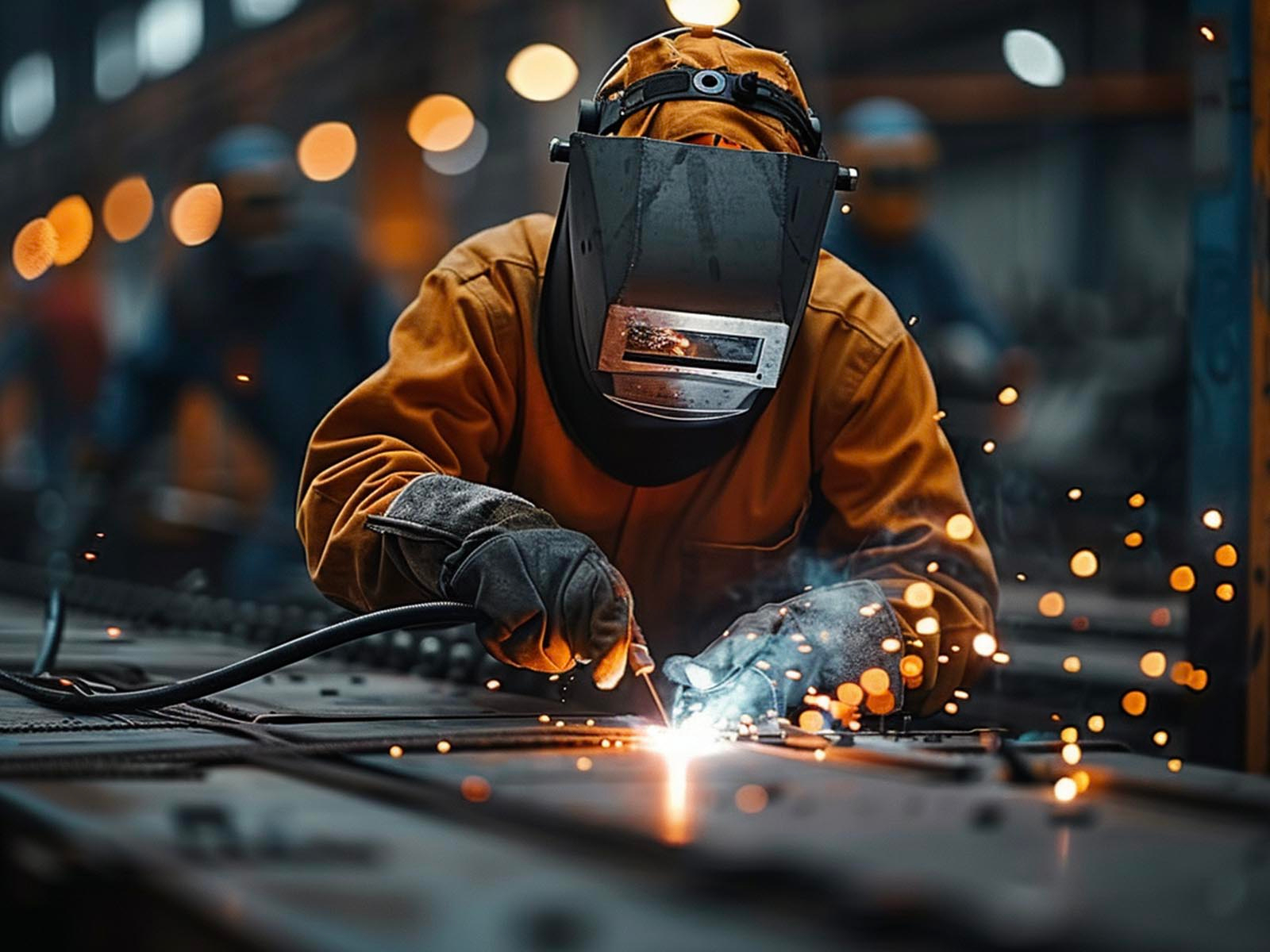
Durability & Performance: Powder coating generally offers superior mechanical resistance to impact, abrasion, and harsh environmental conditions (UV, moisture) compared to standard liquid finishes.
Substrate & Geometry Constraints: Liquid painting remains the required standard for heat-sensitive substrates (plastics, wood) and highly complex geometries where powder application struggles with the Faraday cage effect.
Production Efficiency: Powder coating excels in high-volume, automated production environments due to high transfer efficiency, overspray reclaimability, and rapid curing cycles.
Compliance & Safety: Powder coating is fundamentally a zero-to-low VOC process, drastically reducing environmental compliance burdens, hazardous waste disposal costs, and toxic solvent exposure risks.
Table of Contents
Before comparing technologies, you must establish baseline facility requirements. Facility footprint, expected production volume, and available energy infrastructure heavily influence the feasibility of either system. A high-volume automated line demands different spatial and power resources than a batch-process manual spray booth. You have to map out the exact square footage available for pre-treatment wash lines, application booths, and curing ovens. If your facility lacks the natural gas infrastructure to run high-temperature convection ovens, you immediately face a hard constraint that favors ambient-cure liquid systems. Conversely, if you have the floor space and utility capacity, a continuous conveyorized dry powder line offers massive throughput advantages.
Defining the operational environment dictates the required chemical resistance and physical toughness of the final finish. You must determine if the product will face indoor or outdoor conditions, high-UV exposure, marine salt-spray, chemical contact, or high-traffic mechanical wear. Agricultural equipment operating in abrasive, high-moisture environments requires a vastly different coating specification than an indoor server rack. We evaluate the cross-link density of the polymer matrix to ensure it can withstand the specific environmental degradation factors it will encounter in the field. You cannot over-specify the finish without inflating production times, nor can you under-specify it without risking field failures.
Certification requirements often dictate finish selection directly. Architectural coatings may require AAMA specifications, military applications demand CARC (Chemical Agent Resistant Coating) specifications, food processing equipment needs FDA compliance for incidental food contact, and automotive parts must meet strict OEM salt-spray standards. Ensure your chosen method aligns with these non-negotiable regulatory benchmarks. When you bid on a contract requiring a specific military specification, the choice between wet and dry application is often made for you by the governing standard. You must review the exact testing protocols, such as ASTM B117 for salt spray or ASTM D2794 for impact resistance, before committing to a finishing technology.
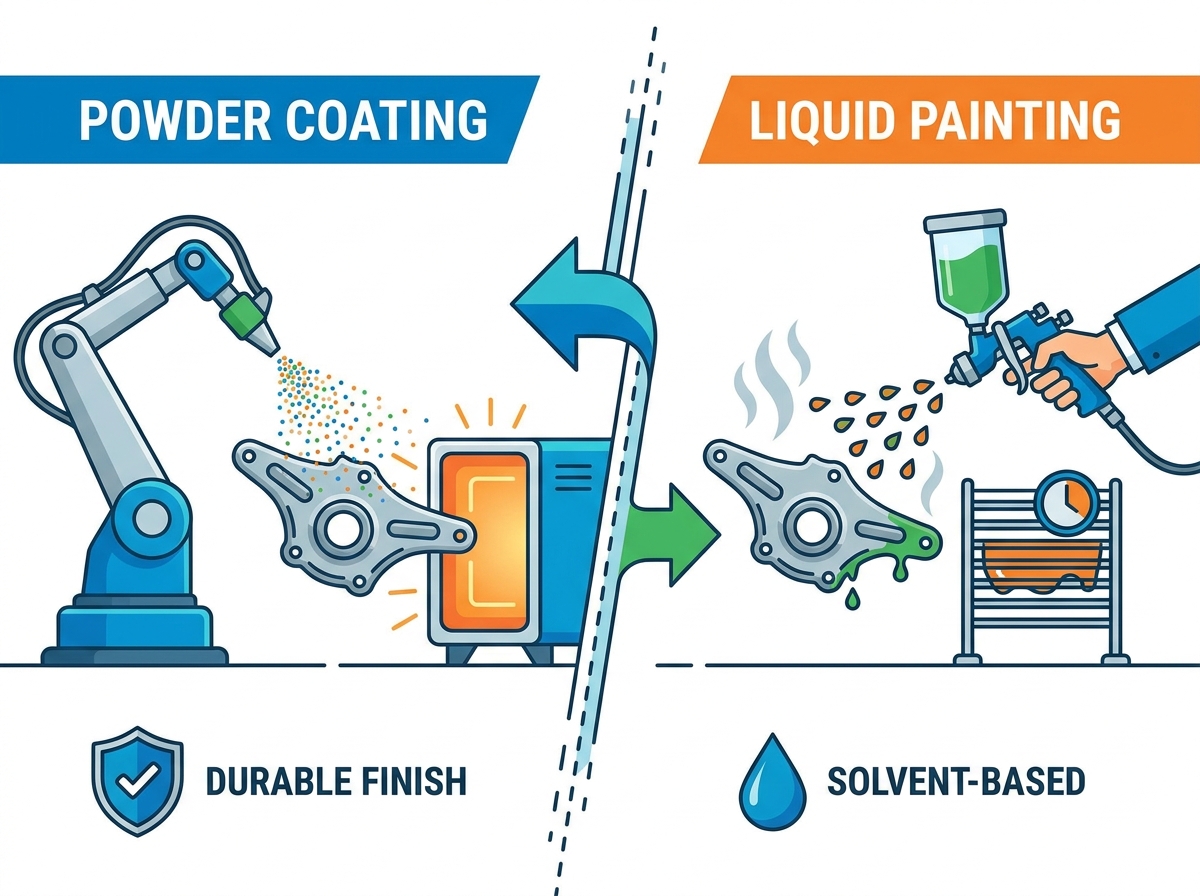
The electrostatic application process involves charging dry powder particles to adhere to a grounded metallic substrate. We use a corona discharge gun to impart a strong negative charge to the powder particles as they exit the nozzle. These charged particles follow the electrostatic field lines to the grounded part, wrapping around edges and adhering to the surface. Thermoplastic powders melt and flow without chemical change, allowing them to be remelted if necessary. Thermosetting powders, which dominate the industrial market, cross-link chemically during the cure. The thermal curing phase typically requires a bake oven operating at 350°F to 400°F. During this phase, the powder melts, flows into a continuous film, and undergoes a chemical reaction to form a highly durable, cross-linked polymer network.
To execute a successful dry powder application, operators follow a strict sequence of events:
Load parts onto the grounded conveyor system, ensuring solid metal-to-metal contact for proper grounding.
Process parts through a multi-stage chemical wash to remove oils, soils, and oxides.
Apply a conversion coating, such as iron phosphate or zirconium, to enhance adhesion and corrosion resistance.
Dry the parts completely in a dry-off oven to prevent moisture from interfering with the electrostatic application.
Apply the dry powder using corona or tribo charging guns in a controlled booth environment.
Transfer the coated parts into the curing oven, holding them at the specified peak metal temperature for the required dwell time.
Cool the parts to ambient temperature before unloading and packaging.
Liquid painting relies on the atomization and application of solvent-borne or water-borne coatings via airless, electrostatic, or HVLP (High Volume Low Pressure) spray systems. The fluid delivery system pumps the liquid coating to the spray gun, where compressed air or high fluid pressure breaks the liquid into fine droplets. The curing and drying process involves the evaporation of volatile carrier solvents or water, followed by chemical cross-linking. This often occurs at ambient temperatures or low-bake levels under 180°F. Two-component (2K) polyurethanes and epoxies require the precise mixing of a base resin and a hardener catalyst just before application, initiating a chemical reaction that cures the film.
The liquid application process requires careful management of fluid dynamics and environmental conditions:
Prepare the surface through mechanical abrasion or chemical cleaning to ensure a proper anchor profile.
Mix the coating components accurately, adhering to strict induction times and pot-life limitations.
Adjust the fluid pressure, atomizing air pressure, and fan pattern on the spray equipment to achieve the desired droplet size.
Apply a primer coat to enhance adhesion and provide a barrier against corrosion.
Allow the primer to flash off, letting the solvents evaporate until the surface is tacky but not wet.
Apply the topcoat in multiple thin passes to build the required dry film thickness without causing runs or sags.
Cure the parts in an ambient environment or a low-temperature bake oven, monitoring humidity and airflow to prevent solvent popping or blushing.
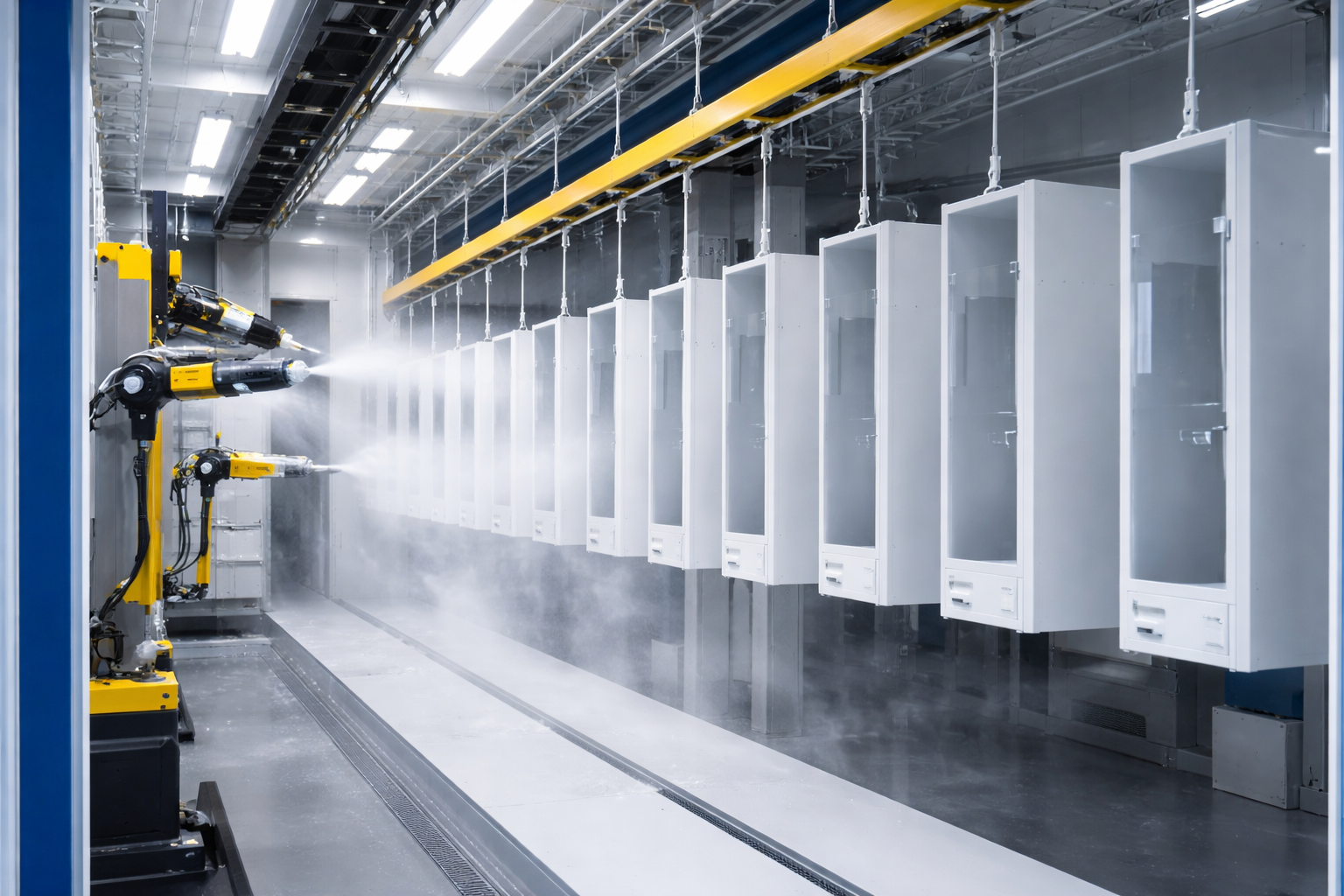
We evaluate impact resistance, tensile strength, flexibility, and chip/scratch resistance under high-traffic industrial conditions. The thermal cross-linking process of Powder Coating typically yields a thicker, tougher, and more resilient single-coat finish than multi-coat liquid systems. This makes it highly suitable for heavy machinery, structural components, and automotive underbody parts. The high molecular weight of the cross-linked polymer matrix provides exceptional resistance to mechanical abrasion. Liquid paints, particularly high-end two-component polyurethanes, offer excellent flexibility and chemical resistance, but they generally require multiple coats to achieve the same film build and impact resistance as a single layer of dry powder.
You must evaluate performance against UV degradation, moisture ingress, salt spray, and extreme temperature fluctuations. Chemical pre-treatment, such as iron or zinc-phosphate conversion coatings, and zinc-rich primers play a critical role in maximizing corrosion resistance for both processes. Proper surface preparation is non-negotiable for long-term field performance. Polyester powders offer excellent UV resistance for outdoor applications, while epoxy powders provide superior chemical and corrosion resistance for indoor or subterranean environments. Liquid aliphatic polyurethanes remain the gold standard for extreme UV gloss retention in aerospace and marine applications, outperforming standard polyester powders in long-term color stability.
Liquid paint remains superior for non-metallic, heat-sensitive materials like composites, fiberglass, plastics, wood, and low-melting-point alloys that cannot survive high cure temperatures. You cannot subject a standard ABS plastic enclosure to a 400°F curing oven without catastrophic deformation. Liquid coatings cure at ambient or low-bake temperatures, making them the only viable option for these substrates. However, advancements in low-cure and UV-cured powders are expanding compatibility to engineered woods like MDF and specific heat-resistant plastics. These specialized powders cure at temperatures as low as 250°F or utilize ultraviolet light to initiate the cross-linking reaction, bypassing the need for high thermal mass heating.
The Faraday cage effect is a significant limitation in dry powder application. Electrostatic fields prevent dry powder from penetrating deep recesses, internal corners, and intricate geometries. The charged particles are attracted to the nearest grounded surface, building up on the edges and leaving the internal cavities bare. Operators must manually adjust gun settings, reduce voltage, and change powder flow rates to force material into these areas, often resulting in uneven film builds. Liquid paint excels in coating complex interior chambers, tight clearances, and highly intricate structural weldments where electrostatic repulsion is not a factor. Atomized liquid droplets rely on fluid dynamics and air pressure rather than electrostatic attraction, allowing them to penetrate deep into complex geometries.
Feature | Powder Coating | Liquid Painting |
|---|---|---|
Typical Film Thickness | 2.0 - 4.0 mils (single coat) | 0.5 - 2.0 mils (per coat) |
Cure Temperature | 350°F - 400°F | Ambient to 180°F |
Transfer Efficiency | Up to 95% (with reclaim) | 30% - 60% |
Faraday Cage Effect | High susceptibility | None |
Substrate Compatibility | Metals, high-temp alloys | Metals, plastics, wood, composites |
Analyze material utilization rates carefully. Overspray from dry powders can be captured, reclaimed, and recycled back into the feed system, yielding up to 95% total transfer efficiency. We use cyclone separators and cartridge collectors to filter the overspray from the booth exhaust air, returning the usable powder to the fluidizing hopper. Contrast this with liquid paint overspray, which is permanently lost as hazardous solid or liquid waste, reducing effective transfer efficiency to 30% to 60%. The inability to reclaim liquid overspray significantly increases material consumption rates and generates substantial volumes of hazardous waste that require specialized disposal protocols.
Compare the rapid, predictable throughput of dry powder systems. Cool down to handle takes 10 to 20 minutes post-cure with no solvent flash-off time required. Once the part exits the oven and reaches ambient temperature, it is fully cured and ready for immediate assembly or packaging. This contrasts sharply with the extended drying, multi-coat flashing, and ambient curing windows required for liquid paint lines. Liquid coatings may feel dry to the touch within hours, but they often require days or weeks to achieve full chemical cure and maximum hardness. This extended curing window creates significant production bottlenecks and requires massive staging areas for parts waiting to cure.
Evaluate how easily each system integrates into fully automated, conveyorized production lines using reciprocators or robotic sprayers. Automated dry powder lines generally require less manual intervention once calibrated compared to complex liquid spray setups. We program reciprocators to apply a consistent film build across large flat surfaces, relying on manual touch-up operators only for complex geometries. Liquid systems require constant monitoring of fluid viscosity, solvent reduction ratios, and atomizing air pressure. The labor requirements for manual touch-ups, booth cleaning, and operator training are significantly higher for liquid lines due to the complexity of fluid dynamics and the hazardous nature of the materials.
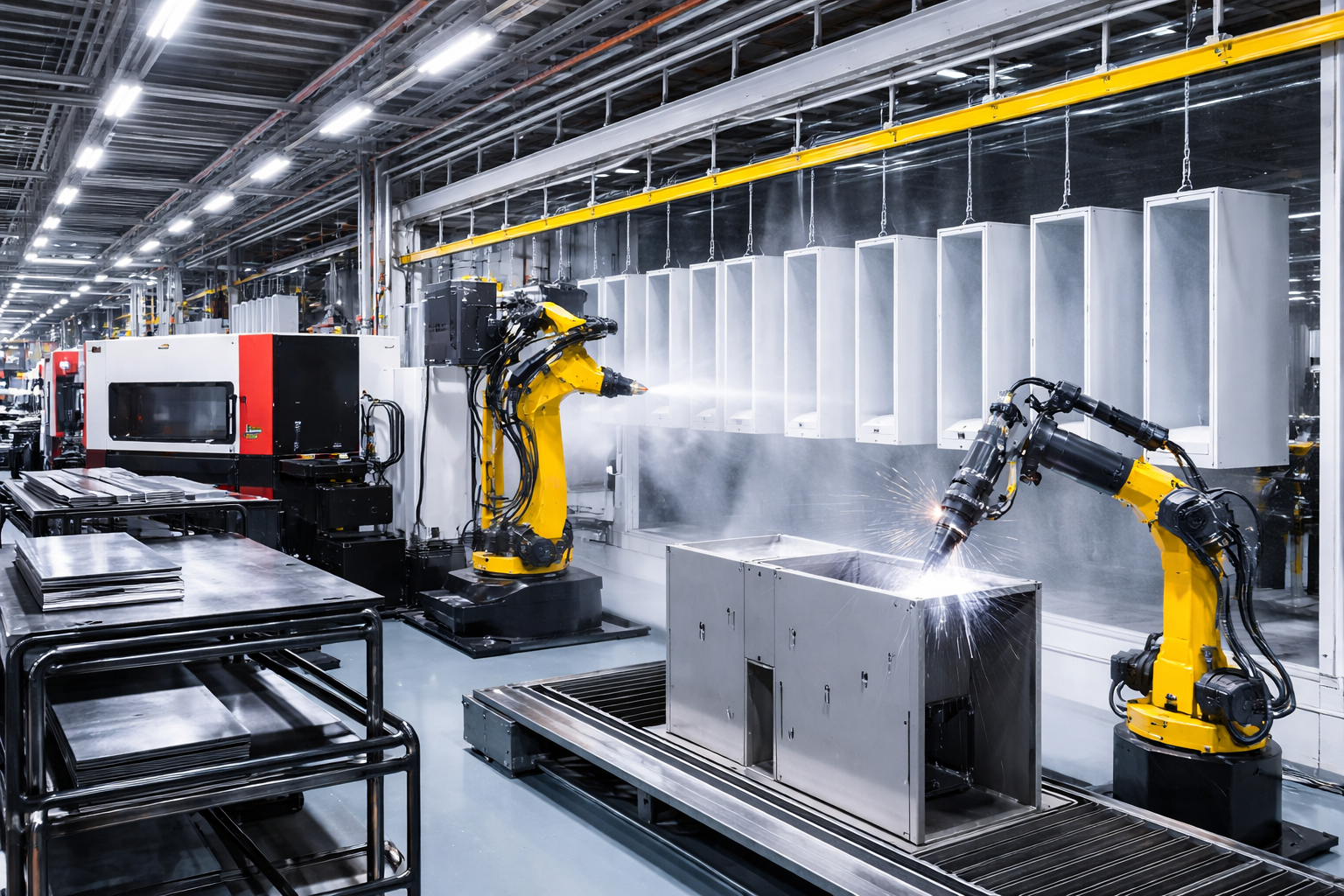
Strict EPA, REACH, and local air-quality regulations surround Volatile Organic Compounds (VOCs) and Hazardous Air Pollutants (HAPs) in solvent-borne liquid paint operations. You must track every gallon of solvent sprayed and report the emissions to regulatory agencies. Exceeding your permitted VOC limits results in severe fines and potential facility shutdowns. Dry powder bypasses the vast majority of VOC and HAP restrictions, simplifying environmental permitting, emissions reporting, and air-filtration system requirements. Because dry powders contain no carrier solvents, they emit virtually zero VOCs during application and curing, making them the preferred choice for facilities operating in strict environmental compliance zones.
Contrast toxicity concerns between the two methods. Exposure to highly hazardous liquid paint solvents, such as isocyanates in polyurethane paints, poses severe health risks, including respiratory sensitization and neurological damage. Operators must wear supplied-air respirators and full-body Tyvek suits to prevent exposure. Dry powder booths primarily present mechanical dust inhalation risks. While operators must wear particulate respirators to prevent inhaling the fine plastic dust, the chemical toxicity is significantly lower than that of solvent-borne liquids. You must implement rigorous medical surveillance programs for liquid spray operators, whereas dry powder operators require standard respiratory protection and basic hygiene protocols.
Analyze facility risks regarding material storage and handling. Storage of highly flammable solvents and liquid paint waste requires explosion-proof mix rooms, specialized fire-suppression systems, and strict adherence to grounding protocols to prevent static discharge ignition. Managing combustible dust safety risks in reclamation lines requires strict NFPA 654 and NFPA 33 compliance. We install explosion venting panels on dust collectors and implement rigorous housekeeping protocols to prevent dust accumulation on horizontal surfaces. While combustible dust presents a serious deflagration hazard, it generally presents a lower continuous fire hazard than volatile solvents, which can emit flammable vapors at ambient temperatures.
Break down the high initial infrastructure investment required for a commercial dry powder line. This includes multi-stage chemical pre-treatment washers, electrostatic application equipment, recovery-booth systems, and high-temperature convection ovens. You need massive floor space and significant natural gas and electrical utility drops to support the curing ovens and wash line burners. Compare this to the lower initial infrastructure barrier to entry for standard liquid painting spray booths and fluid delivery systems. A basic liquid spray operation requires only an exhaust booth, an air compressor, and standard spray equipment, making it much easier to integrate into an existing facility with limited utility capacity.
Analyze ongoing operational inputs and resource consumption. Consider energy consumption, comparing gas-fired high-temperature ovens versus continuous high-volume exhaust ventilation systems for liquid solvent extraction. Dry powder ovens consume massive amounts of natural gas to maintain 400°F temperatures. However, liquid spray booths require massive air make-up units to heat the replacement air drawn into the facility to replace the exhausted solvent vapors. Compare material utilization rates at equivalent target dry film thicknesses and evaluate the volume of hazardous waste generated. Liquid systems generate sludge, spent solvents, and contaminated filters that require specialized handling and disposal, adding significant ongoing operational burdens.
Summarize how high-volume production runs quickly amortize the high initial setup requirements of dry powder lines. Raw material reclamation, lower labor requirements, and reduced waste disposal volumes contribute to a highly efficient production model when throughput scales up significantly. If you run thousands of identical parts per shift, the ability to reclaim 95% of your overspray and eliminate hazardous waste disposal makes the dry powder process incredibly efficient. Conversely, if you run low-volume, highly customized batches with constant color changes, the liquid process offers better flexibility and lower changeover burdens.
Address a major operational drawback: the difficulty of executing localized, seamless spot repairs on cured powder. You cannot simply sand a scratch and blend new powder into the surrounding area. The high curing temperatures required will ruin the surrounding finish. Contrast the typical requirement of stripping and fully recoating a part with the simple sanding, feathering, and localized blending possible with liquid paint. Detail the industry practice of using specialized, color-matched liquid paints for minor field touch-ups on dry powder finishes. For major defects, you must utilize chemical strippers or burn-off ovens to remove the cross-linked polymer completely before starting the pre-treatment and application process over from scratch.
Choosing between powder coating and liquid painting depends on your product requirements, production environment, material characteristics, and long-term performance expectations. By evaluating durability, manufacturing efficiency, environmental compliance, and lifecycle costs, manufacturers can select the finishing process that delivers the best balance of quality, productivity, and value.
DINGPRECISION specializes in precision metal fabrication, surface finishing, and custom manufacturing solutions for a wide range of industrial applications. With advanced production equipment, experienced engineering teams, and strict quality management systems, the company provides reliable fabrication and finishing services that help customers achieve outstanding product quality and consistent manufacturing performance.
Before selecting your finishing process, consider the following:
Evaluate your substrate material and operating environment.
Compare production efficiency, coating durability, and lifecycle costs.
Verify environmental compliance and quality testing requirements.
Partner with an experienced manufacturer that offers integrated fabrication and finishing capabilities.
A: No, applying dry powder over existing liquid paint is not recommended. The high curing temperatures required will cause the underlying liquid paint to blister, burn, or peel, ruining the finish. The substrate must be completely stripped to bare metal and properly pre-treated before application.
A: This is due to the Faraday cage effect. The electrostatic charge used to apply the powder creates a magnetic field that repels particles from tight corners and deep recesses, making it difficult to achieve an even coating in highly complex internal structures.
A: Yes, the initial infrastructure requirement for liquid painting is generally lower. It requires less specialized equipment, such as high-temperature curing ovens and complex recovery booths, making it a more accessible entry point for operations with limited floor space and utility capacity.
A: Minor scratches are typically repaired using a specialized, color-matched liquid touch-up paint. Because cured powder cannot be easily blended or spot-repaired with more powder, significant damage usually requires stripping the entire part and recoating it.
A: While solvent-based liquid paints have high VOC emissions, modern water-borne liquid paints offer significant environmental improvements. They drastically reduce VOCs and HAPs, providing a more compliant alternative when high-temperature curing is not feasible for the substrate.


