
Views: 0 Author: Site Editor Publish Time: 2026-12-14 Origin: Site


When comparing stainless steel vs carbon steel for sheet metal fabrication, start with the finished part’s operating conditions and functional requirements.
Low-carbon steel is often a practical choice for cost-sensitive parts that will receive suitable corrosion protection. Stainless steel may be preferable where corrosion resistance, an exposed metal finish, or repeated cleaning is important.
Neither material is automatically stronger, easier to form, or more economical over the complete product life. Grade, thickness, condition, geometry, finishing, and maintenance all affect the result.
This guide focuses on common sheet metal applications such as equipment enclosures, cabinets, brackets, panels, and welded assemblies.
Carbon steel and stainless steel are broad material categories. A meaningful comparison requires specific grades and delivery conditions.
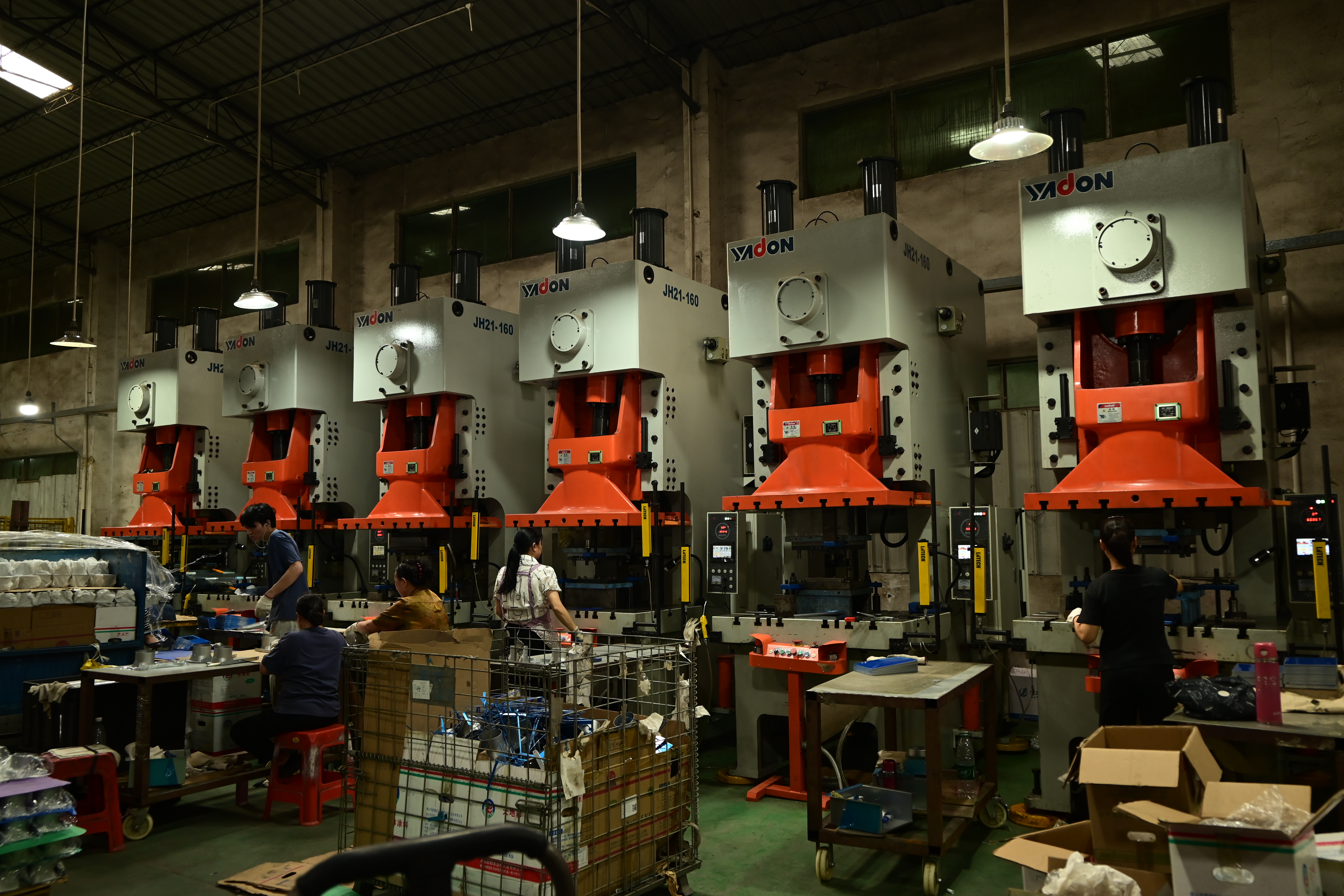
Low-carbon steel, often called mild steel, is widely used for formed and welded parts. Medium- and high-carbon steels serve other applications, but their hardness and heat-treatment potential should not be treated as representative of ordinary enclosure sheet.
Stainless steel contains at least 10.5% chromium. Its corrosion resistance comes from a chromium-rich passive surface film. That protection depends on grade, surface condition, and the environment.
Common stainless options include:
304: A widely used austenitic grade for many general fabrication applications.
316: An austenitic grade containing molybdenum, generally offering improved resistance to chloride-related localized corrosion compared with 304.
430: A ferritic grade used where its corrosion, forming, welding, and appearance characteristics meet the application.
316 is not immune to seawater or aggressive chemicals. Likewise, 430 should not be judged solely by its lower nickel content.
Factor | Low-carbon steel sheet | Common austenitic stainless sheet |
|---|---|---|
Initial material cost | Often lower | Often higher, depending on grade and finish |
Corrosion protection | Commonly uses a coating or metallic protective layer | Relies on grade suitability and a properly maintained surface |
Strength | Depends on grade and condition | Depends on grade and condition |
Forming | Often suitable for routine bending and drawing | Often highly formable, with work-hardening and springback considerations |
Welding | Common mild grades are generally weldable | Requires grade-appropriate procedures and surface restoration |
Appearance | Often painted, coated, or plated | Can be supplied with an exposed brushed or polished finish |
Maintenance | Protection may need inspection and repair | Cleaning and inspection may still be necessary |
Weight | Similar density to stainless steel | Similar density to carbon steel |
For the same geometry, density differences are usually modest. Thickness, stiffeners, and assembly design often have a greater effect on weight.
Unprotected carbon steel can rust in the presence of moisture and oxygen. Its suitability therefore depends on the exposure and the chosen protection system.
Options may include painted or powder-coated steel, galvanized sheet, electro-galvanized sheet, or other specified systems.
The substrate, pretreatment, coating, edges, joints, drainage, and repair method should be considered together. A coating that performs well on a flat test panel may not provide the same result at an inadequately protected weld or damaged edge.
For a closer comparison of uncoated and zinc-coated sheet options, see DINGPRECISION’s steel material selection guide.
Stainless steel can suffer pitting, crevice corrosion, staining, or other forms of deterioration when the grade or design does not suit the environment.
Evaluate:
Chloride exposure, including salt deposits.
Cleaning chemicals and concentrations.
Operating temperature.
Wetting, drying, and drainage.
Crevices and trapped contamination.
Surface finish and cleaning access.
304 may suit many indoor applications. 316 may provide a useful improvement in some chloride-containing environments, but more demanding conditions can require a different grade or design.
For exterior cabinets, material selection should also consider enclosure details. DINGPRECISION’s outdoor electrical enclosure material guide discusses related exposure and construction factors.
Stainless steel is common in hygienic equipment because suitable grades and finishes can provide cleanable, corrosion-resistant surfaces.
However, “304” or “316” alone does not establish food-contact suitability, hygienic design, or compliance with a particular project requirement.
Surface roughness, weld quality, crevices, drainage, cleaning procedures, and applicable specifications must also be reviewed. Some equipment may use stainless steel in exposed process areas and coated carbon steel in protected supporting structures.
There is no universal strength winner.
Yield strength, tensile strength, elongation, and hardness vary with grade, thickness, processing, and heat treatment. Cold-worked stainless steel can behave differently from annealed material, just as a high-strength carbon steel differs from mild forming sheet.
Strength and stiffness are also different. A higher yield strength does not automatically make a panel less flexible under the same working load. Panel stiffness depends strongly on thickness, geometry, supports, and elastic modulus.
Use the applicable sheet specification and material certificates when assessing the design. Avoid comparing isolated handbook values from different product forms or conditions.
Both mild steel and many stainless grades can be formed successfully.
Austenitic stainless steel can offer high ductility, but work hardening and springback affect tooling, force, and bend compensation. A material change may require different settings and a revised flat pattern.
Confirm:
Minimum inside bend radius.
Sheet thickness and material condition.
Grain direction where relevant.
Tooling and available machine capacity.
Hole and feature distances from bends.
Bend sequence and access.
Finished-part tolerances.
Do not assume that stainless steel always permits a tighter bend or that one bend allowance can be reused for both materials.

Cutting performance depends on the grade, thickness, equipment, assist gas, and required edge condition.
Nitrogen is commonly used when an oxide-free stainless laser-cut edge is required. However, gas selection and relative cutting speed are process decisions, not universal rules that stainless must always be slower or use one gas.
Punching force and tool life depend on material strength, clearance, lubrication, geometry, and tooling condition. Stainless processing may require adjustments, but the requirements should be established for the specific job.
Many low-carbon steels and austenitic stainless grades are weldable using suitable procedures.
For stainless steel, review filler selection, shielding, heat input, distortion, and the condition of exposed weld surfaces. Austenitic stainless often has lower thermal conductivity and higher thermal expansion than mild steel, increasing the need for distortion control.
Shielding gas depends on the welding process and application. Pure argon is common in TIG welding; stainless MIG welding can use process-specific mixtures. One gas recipe should not be applied to every weld.
Back purging may be needed where root oxidation must be controlled. After welding, specify how heat tint, oxide, and contamination will be addressed.
Pickling and passivation serve different purposes. Passivation should not be assumed to remove heavy weld scale or replace the required cleaning process.
DINGPRECISION’s sheet metal fabrication services cover cutting, bending, welding, and surface treatment. Confirm the material-specific manufacturing route when requesting a quotation.
Carbon steel often has a lower purchase price, but preparation, coating, masking, inspection, and later maintenance add cost.
Stainless steel may reduce the need for an applied protective coating in a suitable environment. However, fabrication, cosmetic finishing, cleaning, and post-weld treatment can still be significant.
Compare:
Material grade, thickness, and available sheet sizes.
Cutting yield and fabrication time.
Tooling, fixtures, and consumables.
Surface treatment and cosmetic work.
Inspection and documentation.
Packaging and handling.
Cleaning, repair, and replacement during service.
Request current quotations for equivalent functional requirements. Do not assume a fixed price ratio or that stainless always provides the lowest lifecycle cost.

Carbon steel particles transferred onto stainless surfaces can create rust staining. Use suitable handling, cleaning, and contamination controls, including dedicated tools or abrasives where needed.
Dissimilar-metal contact also needs review. When stainless and carbon steel are electrically connected in a conductive liquid, galvanic corrosion can accelerate attack on the less noble material.
Consider isolation, drainage, coating details, and the exposed area relationship. A stainless fastener does not automatically make the surrounding carbon steel joint corrosion resistant.
Requirement | Information to provide |
|---|---|
Environment | Indoor or outdoor location, moisture, chemicals, chlorides, and temperature |
Function | Loads, stiffness, interfaces, and service-life expectations |
Material | Proposed grade, standard, thickness, condition, and substitution rules |
Fabrication | Bends, welds, hardware, and assembly requirements |
Finish | Coating system or stainless finish, cosmetic zones, and cleaning requirements |
Acceptance | Dimensions, material records, finish checks, and agreed tests |
Supply | Quantities, delivery needs, and packaging |
Where two material routes are being considered, ask for comparable quotations and identify any design changes needed for each route.
Not as a general rule. Compare the specified grades, conditions, and thicknesses. Also distinguish yield strength from panel stiffness and overall assembly performance.
No. It generally improves chloride resistance compared with 304, but exposure, temperature, deposits, crevices, and cleaning still matter. Severe environments may require another material or design.
Sometimes. Evaluate corrosion exposure, damage risk, cleaning, appearance, maintenance access, and service requirements. The coating system must be assessed as part of the complete design.
Yes, with an appropriate procedure and filler selection. Review dilution, service temperature, corrosion exposure, and joint protection. No single filler is suitable for every combination.
Yes. Appropriate cleaning and inspection help preserve its surface. Salt, deposits, incompatible cleaners, iron contamination, and damaged weld surfaces can cause problems.
Comparing stainless steel and coated carbon steel for an enclosure, cabinet, bracket, or welded assembly? Share your drawings, operating environment, material preferences, finish, and quantities with DINGPRECISION.
Contact DINGPRECISION to discuss the fabrication scope and request a quotation. Identify critical bends, welds, cosmetic surfaces, and inspection requirements so the proposed material route can be reviewed.
Request a Custom IP-Rated Enclosure Quote
Phone: +1 0757-26630312
Email: niewenhui@dingprecision.com
Website: www.dingprecision.com


