
Views: 0 Author: Site Editor Publish Time: 2026-07-27 Origin: Site


Transitioning a CAD drawing into scaled, consistent production is a high-risk operation for OEMs. You face immense pressure to deliver perfect components on strict deadlines. Fragmented supply chains multiply these risks. Using separate vendors for cutting, forming, finishing, and assembly inflates costs. It extends lead times significantly. It also heavily obscures quality accountability. When defects inevitably occur, isolated vendors quickly point fingers. You lose valuable time resolving these daily disputes. Consolidating production addresses these issues head-on. Partnering alongside a single, capable custom metal fabrication partner mitigates logistical risks. However, you must verify their capabilities deeply. They need proven strength in engineering alignment. They also require rigorous, documented quality control systems. We will explore how to evaluate, select, and safely onboard a facility built for long-term manufacturing success.
Comprehensive cost analysis beats unit price: True OEM partners reduce costs through Design for Manufacturability (DFM) and supply chain consolidation, not just raw machining rates.
Traceability is non-negotiable: Viable partners provide clear documentation (e.g., PPAP, material test reports) for every production run.
Onboarding requires staged validation: Successful transitions rely on rigorous pilot runs and First Article Inspections (FAI) before full-scale manufacturing.
Transparency over guarantees: Trustworthy partners communicate hard limits on tolerances, material availability, and realistic lead times rather than overpromising.
Many companies confuse transactional job shops with strategic manufacturing partners. A job shop operates strictly build-to-print. They receive your drawing, cut the metal, and ship the parts. They offer zero feedback on design flaws. Conversely, a true oem manufacturing partner provides strategic DFM support. They actively manage your inventory through blanket orders. They provide full lifecycle support from prototype to mass production. This proactive approach separates reliable facilities from mere capacity providers.
You can clearly see the differences when mapping out core operational metrics.
Evaluation Metric | Transactional Job Shop | Strategic OEM Partner |
|---|---|---|
Design Feedback | Build-to-print only; ignores cost-saving opportunities. | Proactive DFM reviews; suggests material and bend optimizations. |
Supply Chain | Outsources finishing and assembly; creates blind spots. | In-house processing; full control over schedule and quality. |
Inventory Management | Ships upon completion; zero warehousing support. | Kanban programs; holds safety stock based on EAU. |
Defect Resolution | Points fingers at material suppliers or plating sub-contractors. | Owns the entire process; implements rapid CAPA procedures. |
Consolidating processes dramatically improves supply chain resilience. Logistical handoffs typically cause the longest delays. Moving parts from a laser cutter to a separate bending facility wastes days. Shipping those same parts to an external powder coater wastes more time. Every handoff introduces risk. Parts get damaged during transit. Defect disputes arise when sub-contractors blame each other for scratches. Consolidation eliminates these variables. A unified facility controls the entire schedule.
You must assess a partner's ability to handle volume fluctuations. Demand spikes happen unexpectedly. Transactional vendors often compromise lead times when volumes surge. They force you into constant renegotiation. A capable facility maintains capacity buffers. They run multiple shifts efficiently. They utilize automated load/unload systems on their lasers. This ensures they can scale production up without sacrificing quality or extending delivery dates.
Managing the entire design to delivery workflow requires precise coordination. A structured approach prevents expensive downstream errors.
This critical first step happens long before anyone cuts metal. Engineering teams must align closely. They review tolerances for manufacturability. They optimize material selection based on market availability. They introduce cost-saving design tweaks. For example, changing a welded corner into a bent flange saves hours of labor. Proactive DFM eliminates rework. It ensures parts move smoothly through the production floor.
Robust facilities handle every step internally. We can break end-to-end metal fabrication into three core stages:
Primary Processing: This includes laser cutting, turret punching, and CNC routing. You must evaluate their machine redundancy. Two smaller lasers often prevent bottlenecks better than one massive laser.
Forming and Welding: CNC press brakes bend parts to precise angles. Robotic and manual welding cells join them. Ensure they adhere to certified welding standards like AWS or ASME.
Finishing and Assembly: Bare metal requires protection. Facilities apply powder coating or electroplating. Advanced partners also handle electromechanical integration. They install PCBs, wiring harnesses, and hardware directly into the enclosures.
A seamless workflow relies on robust software. We evaluate partners based on their ERP integration. A modern ERP system tracks your parts in real-time. It provides automated milestone reporting. It manages change-order routing efficiently. If you update a CAD revision, the ERP immediately alerts the shop floor. This connectivity prevents operators from running obsolete revisions.
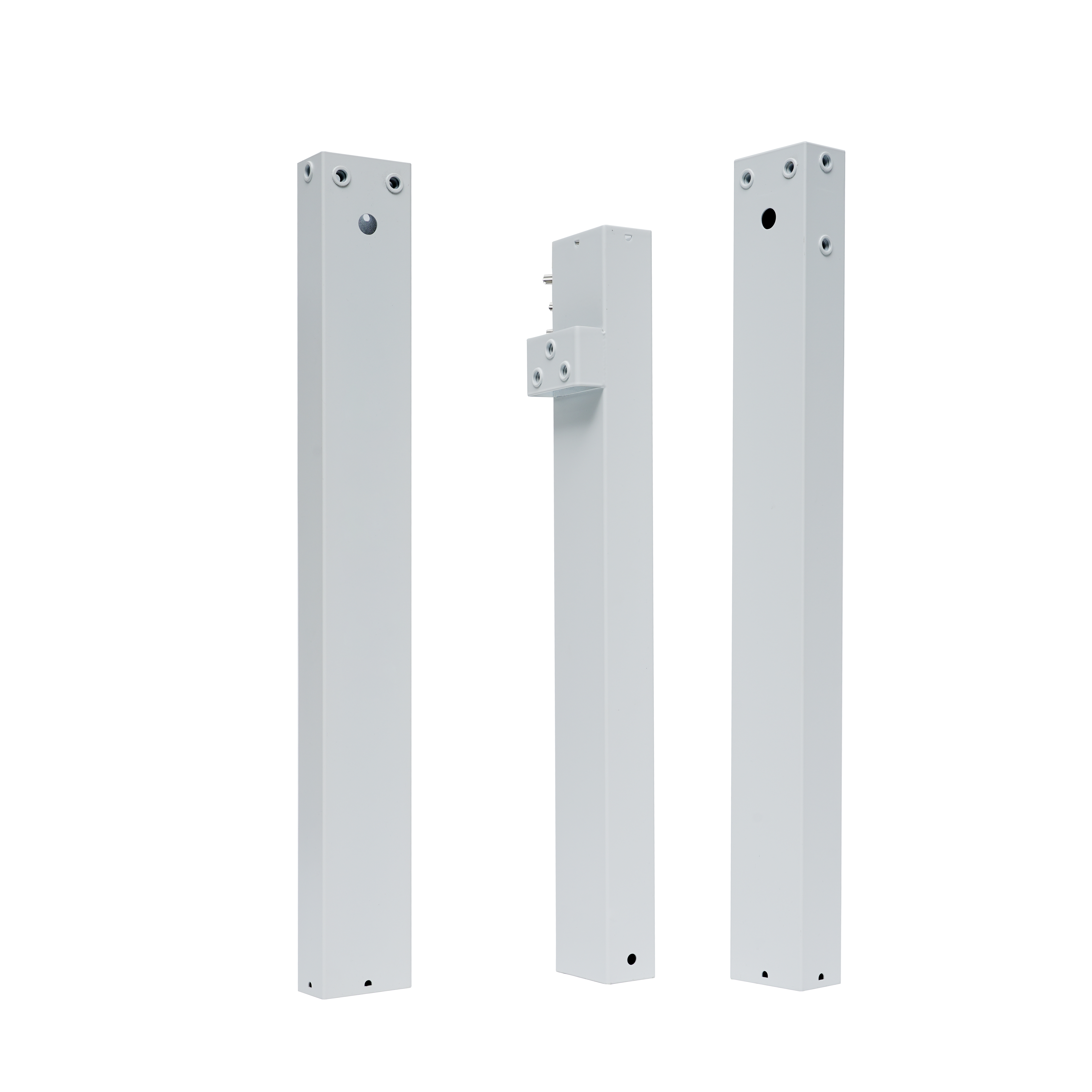
Reviewing an equipment list is not enough. Simply owning a 10kW fiber laser guarantees nothing. You must evaluate how they utilize it. A fast machine sitting idle due to poor maintenance creates severe bottlenecks. Investigate their shift structures. Do they run a lights-out third shift? Ask to review their planned maintenance downtime records. High utilization rates demonstrate a well-managed shop floor.
You must establish clear baselines for tolerances early. Producing five perfect prototypes is relatively easy. Holding those same tolerances across 5,000 units is difficult. High-volume runs introduce thermal expansion during welding. Press brake tooling wears down over time. A reliable partner communicates realistic limits for custom metal parts. They will push back on unnecessarily tight tolerances that inflate costs.
Best Practice: Standardize your bend radii across your CAD models. This prevents operators from constantly changing press brake tooling, saving significant setup time.
Cross-contamination ruins expensive parts. This represents a critical check during any facility audit. Carbon steel dust causes rapid oxidation if it touches stainless steel or aluminum. Investigate their floor layout. They must physically separate grinding areas. They need dedicated tooling for different materials. Strict segregation prevents galvanic corrosion and ensures long-term part durability.
Common Mistake: Overlooking material storage conditions. Storing aluminum sheets outdoors or in high-humidity areas leads to immediate pitting before processing even begins.
Many vendors display an ISO 9001 logo on their website. You must look beyond basic claims. Investigate their active compliance adherence. Ask about their internal audit frequencies. Review their Corrective and Preventive Action (CAPA) procedures. A robust QMS dictates exactly how a facility handles deviations. It proves they document processes systematically rather than relying on tribal knowledge.
Manual calipers fall short in modern manufacturing. Complex geometries require advanced measurement tools. Assess their inspection infrastructure carefully. Automated Coordinate Measuring Machines (CMM) ensure repeatable accuracy. Laser scanning arms provide rapid verification against native CAD models. They must document in-process inspections at every workstation. This keeps defects from traveling downstream within the integrated metal fabrication environment.
Mistakes will occasionally happen. A partner's reaction to defects reveals their true character. We demand a transparent look at how they communicate issues. They should notify you immediately when parts fall out of spec. They must outline a clear rework plan. They also need to implement permanent fixes to prevent recurrence. Avoid vendors who constantly hide their scrap rates. Hidden scrap usually masks systemic process failures.
Facility audits reveal operational truths you cannot see online. Watch closely for red flags on the shop floor. Poor organization indicates chaotic management. Look for clear aisle markings and organized tool cribs. Ask operators about undocumented training procedures. If training relies solely on word-of-mouth, consistency suffers. Finally, evaluate their communication channels. Vague responses during the quoting phase usually signal massive communication failures during production.
Never transition your entire production volume at once. You must phase the onboarding process carefully. Start with a rigorous pilot run. Demand a comprehensive First Article Inspection (FAI) report before signing off. Request capability studies (like Cpk) for critical dimensions. These metrics prove the process is statistically stable. Only authorize full mass production after reviewing and approving these validation reports.
Your contract acts as your ultimate safety net. Structure SLAs around realistic delivery buffers. Include raw material index pricing clauses. Metal prices fluctuate wildly; an index protects both parties fairly. Finally, establish strict intellectual property (IP) protection rules. Ensure they restrict digital and physical access to your proprietary CAD files.
Balance capability and communication: The right partner offers advanced technical machinery alongside transparent, proactive project management.
Conduct upfront due diligence: Auditing a facility's DFM process, quality systems, and machine capacity prevents massive downstream supply chain failures.
Phase the rollout carefully: Rely on pilot runs, FAI reports, and capability studies to validate the process before scaling up.
Take immediate action: Prepare a comprehensive RFQ including 3D CAD models, material specifications, and Estimated Annual Usage (EAU). Reach out to schedule an in-person facility audit today.
A: Reputable partners sign comprehensive Non-Disclosure Agreements (NDAs) upfront. They use secure, encrypted file transfer protocols for all CAD data. If your parts fall under defense regulations, they maintain strict ITAR compliance. They also enforce restricted facility access, preventing unauthorized personnel from viewing sensitive production lines.
A: A safe transition typically takes several weeks. DFM reviews and engineering alignment take 1-2 weeks. Prototyping and First Article Inspection (FAI) add another 2-4 weeks. Full production tooling and ramp-up follow shortly after. Aggressive, overnight promises usually lead to severely compromised quality.
A: True OEM partners rarely force strict per-run MOQs. Instead, they structure agreements based on your Estimated Annual Usage (EAU). They offer flexible kanban or blanket order programs. This allows them to run large, efficient batches internally while releasing smaller, manageable shipments to you.
A: Top-tier facilities assign dedicated account managers to your project. They utilize ERP-driven automated updates to alert you instantly about disruptions. Proactive communication prevents radio silence during crises, allowing both teams to formulate alternative scheduling or material substitution plans quickly.


