
Views: 0 Author: Site Editor Publish Time: 2026-07-31 Origin: Site


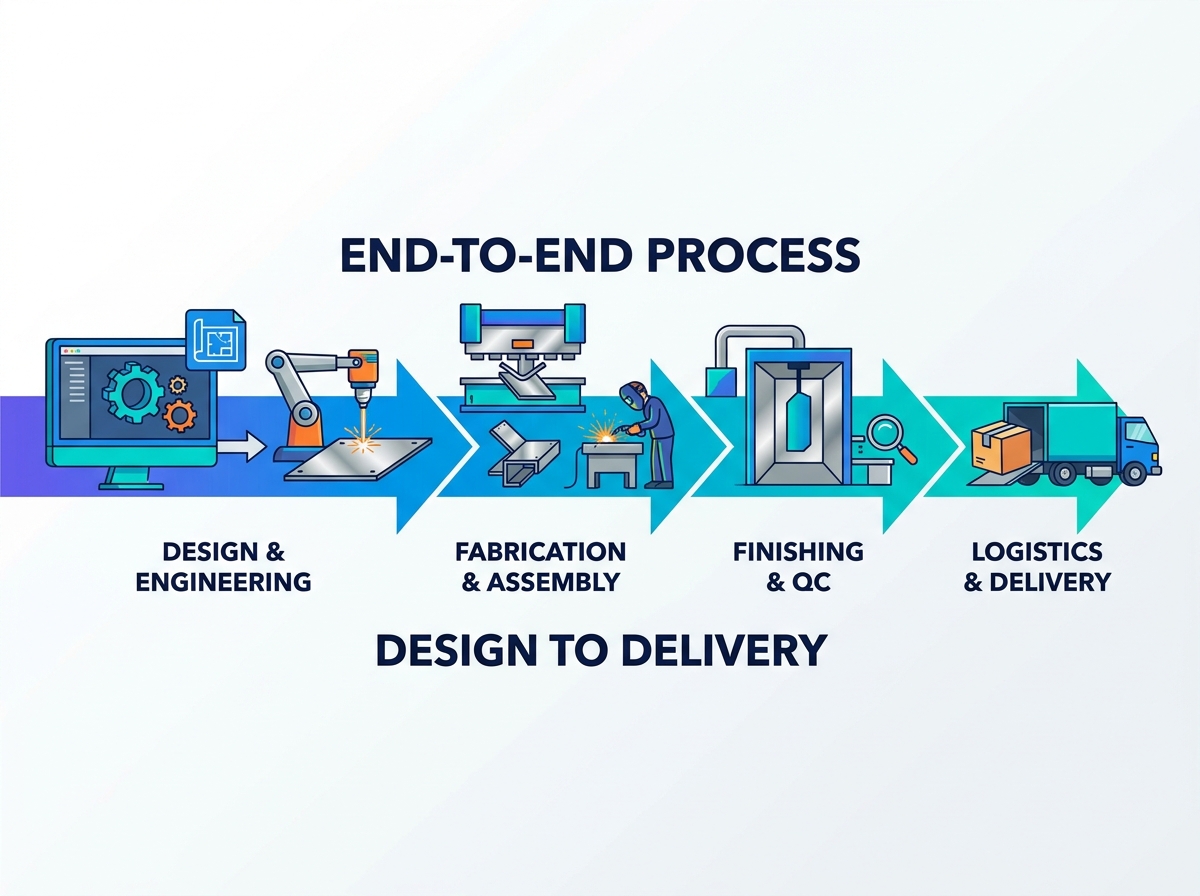
Managing multiple specialized vendors for a single manufacturing project introduces compounding risks: extended lead times, tolerance stack-up errors, and fragmented accountability. Procurement and engineering teams frequently struggle to align design, cutting, welding, and finishing processes without inflating costs or compromising on quality. Relying on disjointed supply chains limits scalability and complicates quality assurance. Transitioning to turnkey Metal Fabrication Services—where a single partner owns the entire lifecycle from Design for Manufacturability (DFM) to final delivery—mitigates these risks. This guide breaks down how to evaluate end-to-end fabricators, assess process capabilities, and structure a vendor selection framework based on technical competence, modern digital capabilities, and long-term value.
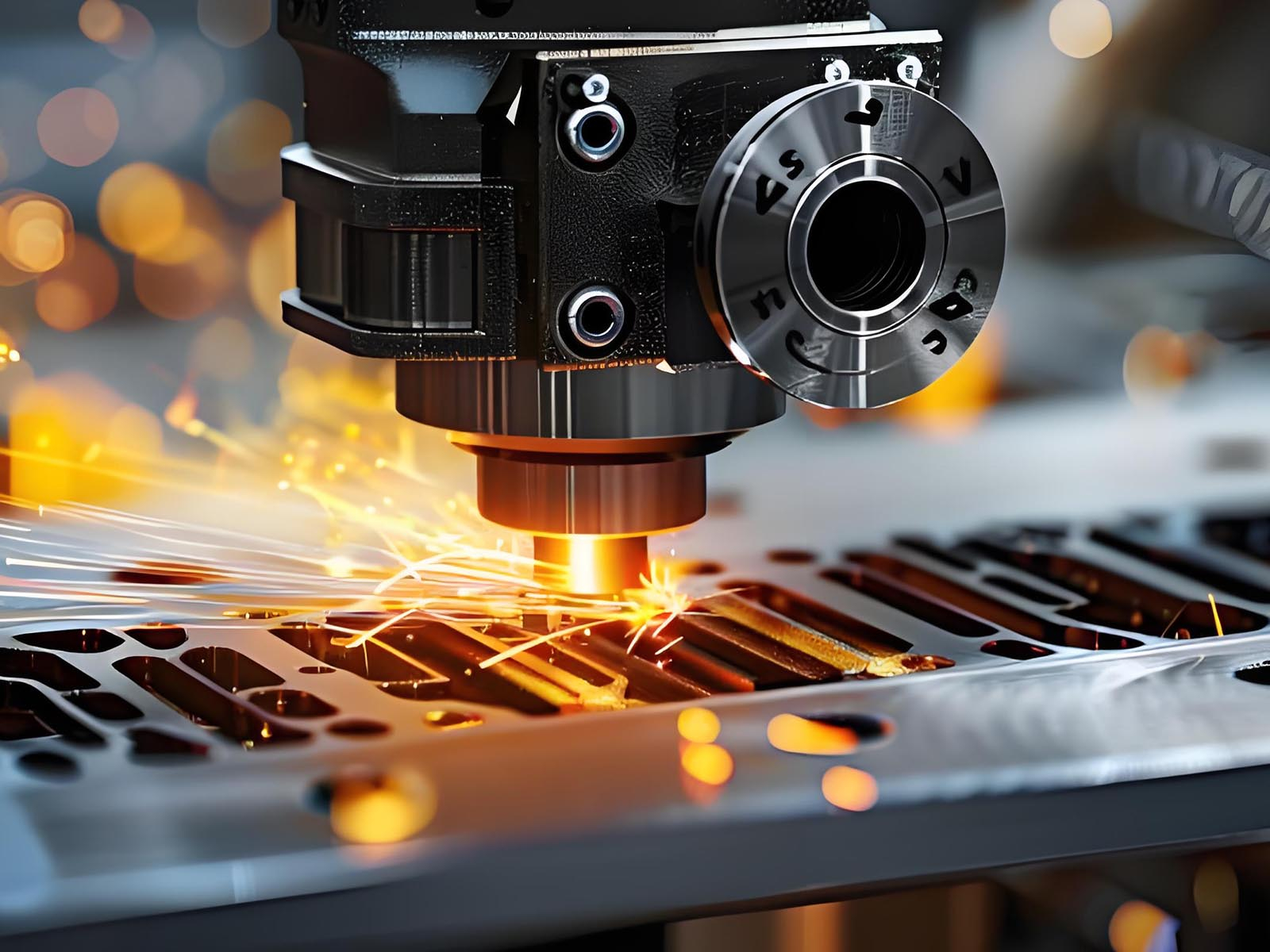
Single-Source Accountability: Consolidating the fabrication process under one provider eliminates vendor-to-vendor transit times, reduces administrative and logistical overhead, and ensures strict adherence to initial design tolerances.
DFM is the Cost-Driver: Engaging a fabrication partner during the initial design phase using modern, 3D-visualized Design for Manufacturability (DFM) feedback is the most effective way to identify cost-saving material substitutions and reduce unnecessary production steps.
Specialization Alignment: A provider's core technical focus (e.g., precision sheet metal vs. heavy structural fabrication) must match the physical and technical requirements of the project to ensure structural integrity and cost-efficiency.
Scalability Requires Redundancy: A reliable fabrication service must demonstrate equipment redundancy and scalable workflows to smoothly transition a project from rapid prototyping to high-volume production.
Compliance is Non-Negotiable: Evaluating a partner requires strict verification of industry-specific certifications (e.g., ISO 9001, AS9100) and documented, verifiable quality control systems.
Table of Contents
Traditional procurement models force engineering teams to act as logistics coordinators. You send flat patterns to a laser cutting house, ship the blanks to a separate welding shop, and finally route the welded assemblies to a powder coating facility. This fragmented approach creates massive operational friction. Every time a part moves between facilities, you absorb hidden freight costs and add days to the production schedule. Administrative overhead skyrockets as purchasing agents manage multiple purchase orders, track disparate shipping schedules, and chase down material certifications from different vendors.
The most severe consequence of a fragmented supply chain is the loss of quality control. When a final assembly fails inspection due to a tolerance stack-up issue, the blame game begins. The welder blames the cutter for oversized slots, the cutter blames the engineer for tight tolerances, and the finisher blames the welder for poor surface preparation. A single partner owning the entire process eliminates this dynamic. When one facility handles the design, cutting, forming, welding, and finishing, they hold complete liability for the final part. If a bend radius is off, the press brake operator walks over to the laser department to adjust the flat pattern immediately. This closed-loop feedback dramatically lowers project management hours and ensures parts meet specifications before they ever hit the shipping dock.
Successful turnkey partnerships rely on specific operational criteria. You need transparent lead times backed by integrated Enterprise Resource Planning (ERP) systems. A single point of contact should manage your account, providing real-time updates on where your parts are on the shop floor. Digital-first communication channels allow engineers to push revision changes directly to the manufacturer's programming department. A unified quality assurance protocol must span all production stages, utilizing First Article Inspections (FAI) at every critical routing step to catch deviations early.
Engineering reviews must happen before a single sheet of metal is loaded onto a cutting bed. Advanced fabricators utilize automated DFM software and interactive 3D CAD visualization tools to analyze STEP files and identify manufacturing bottlenecks. They look at bend deductions, K-factors, and material grain direction to ensure the flat pattern will form correctly on the press brake. This rapid feedback loop prevents engineers from designing parts that are physically impossible to manufacture or unnecessarily expensive to produce.
Design optimization techniques directly impact the bottom line. Fabricators suggest reducing material waste by nesting parts more efficiently. They simplify bend profiles to eliminate the need for custom press brake tooling. Standardizing hardware—such as using the same PEM nut size across an entire assembly—reduces setup time and hardware insertion errors. Engineers also help select appropriate alloys based on structural stress and environmental exposure, ensuring the material matches the application without over-engineering the component.
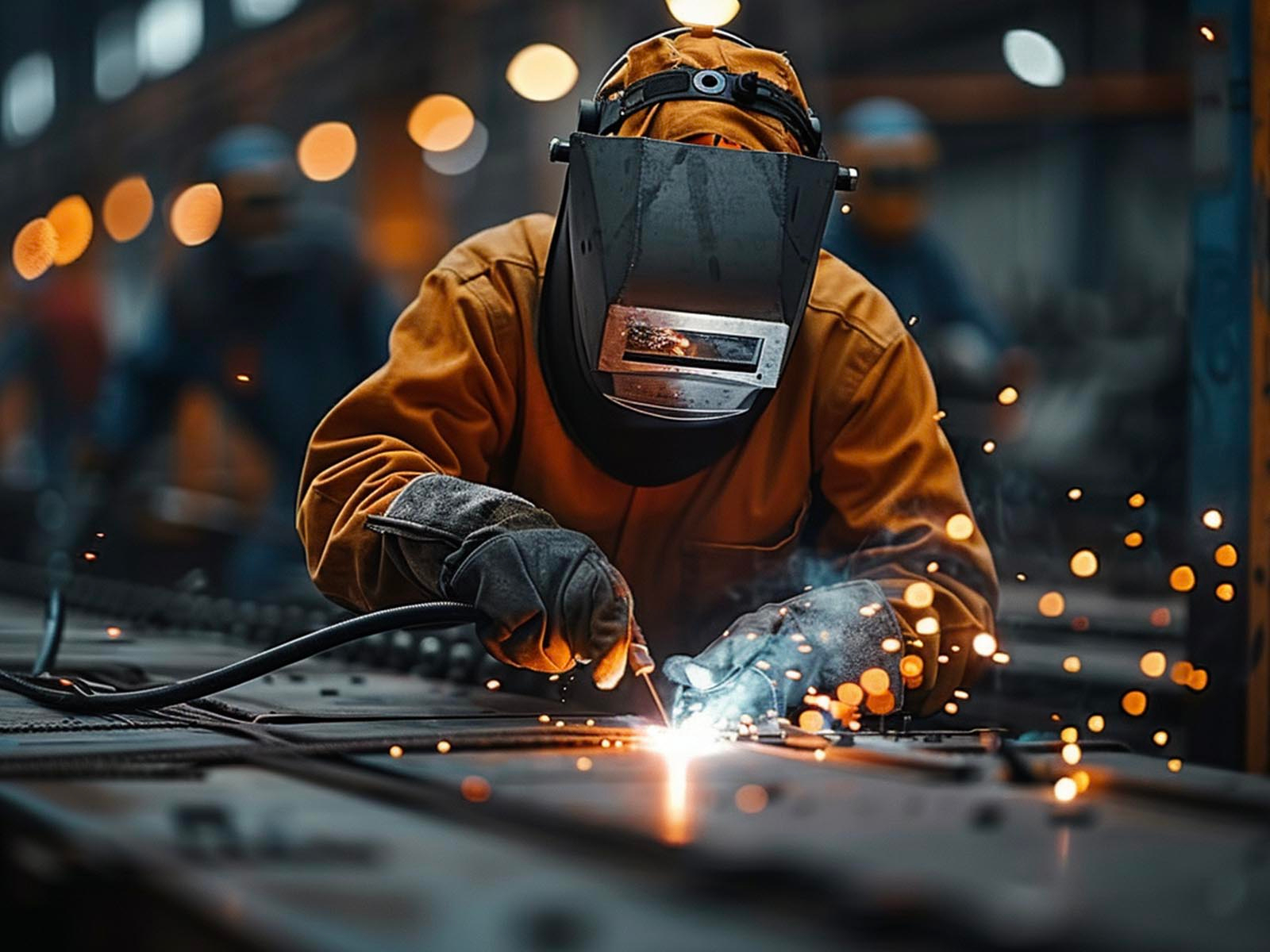
The shop floor relies on primary material processing methods to turn raw sheets into precise blanks. Fiber lasers dominate thin-gauge cutting, offering extreme speed and clean edges on carbon steel, stainless steel, and aluminum. Waterjet cutting handles thicker plates and heat-sensitive materials, using high-pressure water and abrasives to slice through metal without creating a Heat-Affected Zone (HAZ). CNC punching machines remain highly relevant for parts requiring louvers, countersinks, or extensive hole patterns, utilizing specialized forming tools to punch and form in a single setup. Automated nesting software maximizes sheet yield, rotating and interlocking parts to reduce material scrap.
Forming and bending transform flat blanks into three-dimensional structures. Precision press brakes equipped with CNC backgauges and hydraulic crowning systems ensure exact dimensional tolerances. Operators rely on an extensive tooling inventory—including gooseneck punches, acute dies, and hemming tools—to achieve repeat accuracy across multiple batches. Modern press brakes feature offline programming, allowing engineers to simulate the bending sequence on a computer to check for tool collisions before the job reaches the floor.
Cutting Technology | Optimal Material Thickness | Key Advantages | Limitations |
|---|---|---|---|
Fiber Laser | 0.020" to 1.000" | Extreme speed, clean edges, tight tolerances | Struggles with highly reflective materials at high thicknesses |
Abrasive Waterjet | 0.125" to 6.000"+ | No heat-affected zone, cuts any material | Slower cutting speeds, higher operating costs |
CNC Punching | 0.030" to 0.250" | High-speed hole making, inline forming (louvers) | Requires specific tooling, leaves nibble marks on contours |
High-Definition Plasma | 0.250" to 2.000" | Cost-effective for thick plate, fast piercing | Wider kerf, rougher edge quality compared to laser |
Welding processes require specific expertise based on material type and production volume. MIG (Metal Inert Gas) welding provides high deposition rates for carbon steel frames and heavy structural components. TIG (Tungsten Inert Gas) welding offers precise heat control and superior aesthetics, making it the standard for thin-gauge stainless steel and aluminum enclosures. Robotic welding cells handle high-volume production runs, utilizing custom welding fixtures to lock parts in place and ensure every weldment is identical. This automation increases overall component consistency and reduces reliance on manual labor for repetitive tasks.
Complex mechanical assembly services push the value further down the supply chain. Fabricators install hardware using automated insertion presses, ensuring PEM standoffs and studs are seated flush and secure. In-house electromechanical integration allows the fabricator to mount DIN rails, wire harnesses, and cooling fans directly into the metal enclosure. Delivering a fully assembled, plug-and-play unit reduces the final assembly time on your own production line.
Raw metal rarely survives in the field without proper finishing. Finishing options provide durability, environmental protection, and aesthetics. Powder coating applies a dry powder electrostatically, curing it in an oven to create a hard, impact-resistant shell. Anodizing alters the surface chemistry of aluminum, providing extreme corrosion resistance and a durable finish. Galvanizing dips carbon steel into molten zinc for heavy-duty outdoor applications. Bead blasting removes weld discoloration and provides a uniform matte finish on stainless steel.
The logistical advantage of a turnkey partner extends to the shipping dock. In-house packaging departments design custom crates and foam inserts to protect heavy or awkwardly shaped assemblies during transit. Custom kitting services group specific parts together, allowing your assembly line workers to pull one box containing everything needed for a specific build. Localized delivery fleets and direct-to-end-user fulfillment options bypass your warehouse entirely, shipping finished goods straight to your customer.
Not all metal shops are built the same. You must match the provider's specialization to your project class. Precision sheet metal fabrication focuses on tight tolerances, thin-gauge materials, and cosmetic finishes. Heavy structural steel fabrication deals with massive I-beams, thick plates, and structural welds requiring ultrasonic testing. Custom light-gauge component manufacturing often involves high-speed stamping and progressive dies. Selecting a provider whose core machinery and labor pool do not align with your specific material grade, thickness, and volumetric requirements leads to disaster. A structural shop will destroy a delicate aluminum enclosure, and a precision sheet metal shop lacks the crane capacity to move a 5,000-pound steel skid.
Modern digital interfaces separate agile partners from traditional, slow-turnaround machine shops. Instant online RFQ systems and automated 3D-file analysis tools allow you to upload a STEP file and receive a quote in hours, not weeks. These systems analyze the geometry, calculate machine time, and check material availability instantly. Real-time production tracking provides a digital dashboard showing exactly where your parts are in the routing process. Transparent digital communication ensures that when an engineer updates a revision, the shop floor receives the new flat pattern immediately, preventing the production of obsolete parts.
Audit a provider's equipment list rigorously. A robust facility must have modern, automated machinery and built-in redundancy. If a shop has only one laser cutter and it goes down for maintenance, your entire production schedule halts. Look for facilities with multiple lasers, a bank of press brakes, and several welding stations. Automated material handling systems—such as laser towers that load raw sheets and unload cut parts unattended—demonstrate a commitment to high-efficiency, lights-out manufacturing.
Certifications establish the baseline for trustworthiness. Providers must possess relevant credentials to prove their quality management systems function correctly. ISO 9001 serves as the foundation for general manufacturing. ITAR registration is mandatory for defense contractors handling export-controlled data. AS9100 dictates strict traceability for the aerospace sector, while ASME certifications govern the welding of pressure vessels. Beyond paper certificates, inspect their quality lab. They must utilize advanced inspection tools like Coordinate Measuring Machines (CMMs), laser scanners, and optical comparators to verify part dimensions against the original CAD model.
Assess how the provider handles volume transitions. A competent partner offers rapid prototyping to validate the design, using soft tooling and manual processes to get the first article in your hands quickly. As the product gains market traction, they must seamlessly scale into automated production runs. This means transitioning the part to robotic welding cells or hard tooling without requiring complete redesigns or forcing you to find a new high-volume vendor.
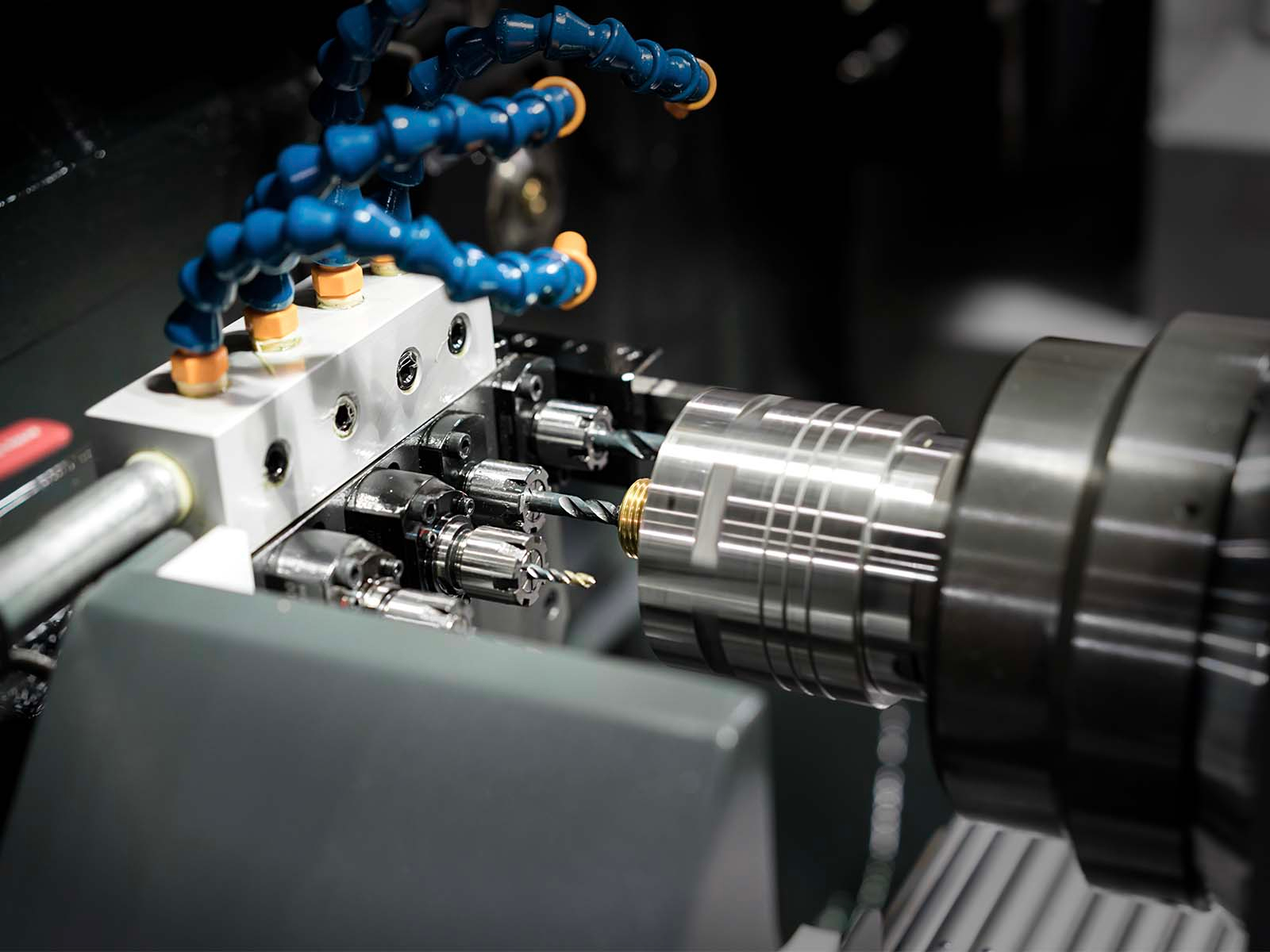
Engineers constantly weigh upfront material costs against lifecycle longevity. Standard carbon steel is cheap and easy to weld, but it requires extensive surface preparation and heavy powder coating to survive outdoors. Specialized stainless alloys (like 316L) or lightweight aluminum (like 5052) carry higher raw material costs but offer inherent corrosion resistance. Choosing the right material upfront prevents premature field failures, reduces warranty claims, and eliminates the need for costly maintenance repainting down the road.
Custom fabrication involves strict financial mechanics regarding tooling. Higher initial investments in custom stamping dies, heavy-duty forming tools, or robotic welding fixtures require capital upfront. However, these investments are justified by significant per-unit cost reductions in high-volume runs. A custom progressive die might cost tens of thousands of dollars, but it reduces the cycle time of a part from three minutes on a press brake to three seconds in a stamping press. You must calculate the break-even point based on your annual volume projections.
Opaque project management drains budgets silently. Delays in answering Requests for Information (RFIs) halt production lines. Unapproved design deviations—where a shop floor operator changes a bend radius to make a part fit without telling engineering—cause massive rework during final assembly. A lack of real-time production tracking means you cannot accurately schedule your own downstream assembly processes, leading to idle labor on your floor while you wait for parts to arrive.
Global metal shortages, mill allocations, and tariff fluctuations risk delaying production and blowing up budgets. Mitigate this risk by partnering with fabricators who maintain deep relationships with domestic mills and large service centers. A strong partner holds strategic raw material inventory for their key accounts, shielding you from sudden market spikes. Ensure your contract includes transparent material escalation clauses tied to recognized commodity indexes, so price adjustments are based on data, not arbitrary markups.
Mid-production engineering changes cause scrap, rework, and budget overruns. Implement strict digital change-order protocols. Require digital twin or 3D visualization sign-offs before physical production begins. If a revision is necessary, the fabricator must provide a clear impact analysis detailing the cost of scrapped blanks and the schedule delay before the Engineering Change Order (ECO) is approved.
Tool wear, machine thermal expansion, or manual operator fatigue lead to out-of-spec parts in later batches. Mandate First Article Inspection (FAI) reports for every new setup. Require statistical process control (SPC) data for critical dimensions on high-volume runs. Prioritize fabricators utilizing automated robotic cells for repetitive tasks, as robots do not suffer from fatigue and apply the exact same weld parameters to the thousandth part as they did to the first.
Choosing the right metal fabrication services provider is about more than manufacturing capability—it is about finding a partner that can support your project from design through final delivery. By evaluating engineering expertise, production capacity, quality control, and supply chain reliability, you can reduce costs, improve efficiency, and ensure consistent product quality throughout the entire manufacturing process.
DINGPRECISION specializes in providing precision metal fabrication services and custom manufacturing solutions for customers across a wide range of industries. With advanced production equipment, experienced engineering teams, and strict quality management systems, the company delivers reliable, high-precision metal components and turnkey fabrication solutions that meet demanding international standards.
Before selecting a metal fabrication partner, consider the following:
Evaluate the supplier's engineering capabilities and DFM support.
Verify production capacity, certifications, and quality control systems.
Choose a manufacturer with comprehensive in-house fabrication capabilities.
Partner with a trusted supplier that provides stable production, responsive technical support, and reliable long-term cooperation.
A: Sheet metal fabrication focuses specifically on processing flat metal up to about 0.250 inches thick via cutting, punching, and bending. Custom metal fabrication encompasses a much broader range of materials, including heavy plates, structural beams, and complex assemblies requiring specialized machining, heavy welding, and electromechanical integration.
A: DFM identifies overly complex features before production starts. It suggests standard material thicknesses, optimizes bend radii to match existing tooling, and nests parts efficiently. This reduces machine setup time, minimizes material scrap, and eliminates the need for expensive custom press brake dies.
A: A reliable facility must hold foundational certifications like ISO 9001 for quality management. Depending on your sector, look for specialized credentials such as AWS certified welders for structural integrity, AS9100 for aerospace traceability, ITAR for defense compliance, or ISO 13485 for medical devices.
A: Turnkey fabrication drastically reduces logistical costs and eliminates transit damage risks between facilities. It provides faster lead times, lowers project management overhead, and ensures single-source accountability. If a part fails inspection, the turnkey provider fixes it internally without blaming a third-party vendor.
A: Rapid prototypes can take just a few days when utilizing modern digital quoting, laser cutting, and standard tooling. Complex, high-volume production runs requiring custom stamping dies, robotic weld fixtures, or specialized extrusions may take several weeks to months to fully implement and scale.
A: You must provide 2D drawings with specific tolerances and 3D CAD models (STEP files). Include exact material grades, hardware specifications, desired finishing requirements, and estimated annual production volumes to ensure the fabricator can calculate accurate machine times and material yields.


