
Views: 0 Author: Site Editor Publish Time: 2026-07-26 Origin: Site


Housing Battery Energy Storage Systems (BESS) and sensitive industrial equipment carries incredibly high stakes. When these high-voltage systems fail, operators face severe consequences. You risk deadly thermal runaway, corrosive moisture ingress, and catastrophic system downtime. A single point of failure can shut down entire facilities or destabilize local energy grids. Standard server racks simply cannot handle these extreme operational demands. Transitioning to specialized, purpose-built enclosures becomes a necessary step. This strategic choice ensures absolute safety and guarantees compliance with stringent industry standards. It also allows you to scale grid deployments reliably over time. We designed this article to give you a clear, evidence-based framework for your next infrastructure project. You will learn the specific engineering requirements needed for advanced energy systems. We will also show you how to evaluate and select the right manufacturing partners. By the end, you will understand how precise fabrication directly prevents critical field failures.
Safety and Compliance are Baseline: BESS and industrial enclosures require strict adherence to IP/NEMA ratings and thermal management standards to prevent critical failures.
Precision Matters: High-precision manufacturing directly impacts assembly speed, weatherproofing, and structural integrity under heavy battery loads.
OEM Scalability is a Risk Factor: Evaluating an OEM must go beyond prototype capabilities to include supply chain resilience, testing, and volume production capacity.
Total Cost of Ownership (TCO): Upfront engineering and tooling costs in custom metal fabrication are offset by reduced field failures and faster onsite deployment.
Many engineering teams initially try adapting standard commercial cabinets for heavy-duty applications. They quickly discover severe physical limitations. BESS battery modules and heavy industrial drives easily exceed normal static load capacities. A fully populated lithium-ion battery rack can weigh thousands of pounds. Standard commercial racks will warp, twist, or buckle under these extreme weights. Dynamic loads during transit create even more stress. A cabinet vibrating on a flatbed trailer experiences immense sheer forces. You need a custom metal cabinet to handle these massive physical demands safely. Purpose-built frames utilize reinforced channels to distribute weight evenly across the base.
Thermal management presents another massive technical hurdle. Standard enclosures lack proper integration points for modern cooling infrastructure. They cannot support the heavy HVAC units, liquid cooling loops, or engineered passive ventilation needed by energy storage systems. Batteries generate intense, continuous heat during rapid charge and discharge cycles. Without proper cooling channels, you risk dangerous thermal runaway. Custom designs allow you to build specific routing channels. You can integrate heavy-duty mounting brackets exactly where your cooling units need them. This prevents localized hot spots.
Finally, consider physical longevity and risk mitigation. Standard cabinets often leave wasted internal space because they use generalized dimensions. A custom approach optimizes your specific layout. You reduce the overall physical footprint. This optimization lowers your freight shipping costs significantly. You also mitigate long-term operational risks. Custom enclosures provide tight seals and exact component fits. This prevents environmental damage from dust and moisture. It ultimately reduces catastrophic field failures and keeps your systems online longer.
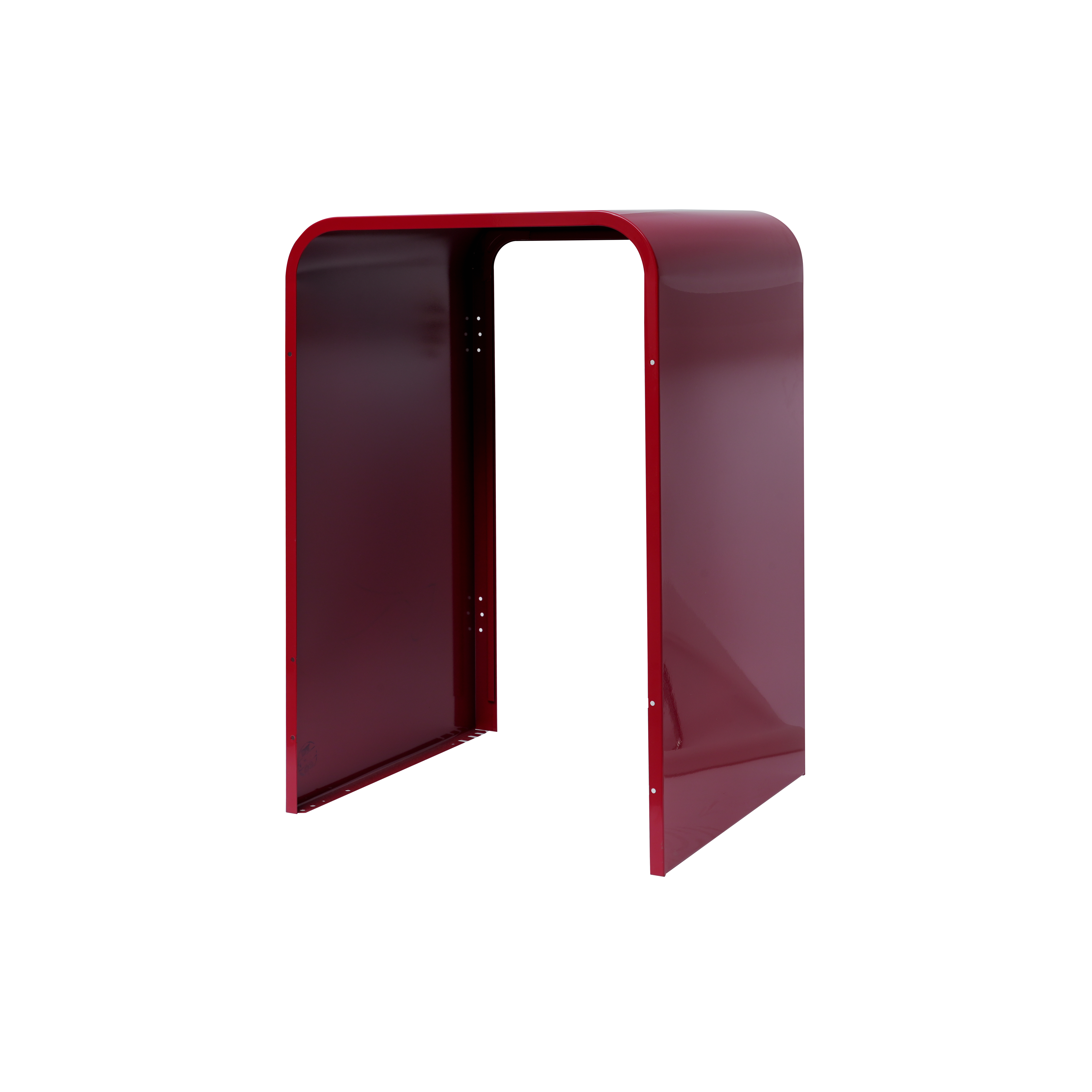
Effective bess enclosure manufacturing relies on several critical evaluation points. You must meticulously assess structural integrity, thermal management integration, and environmental durability. A failure in any of these three areas compromises the entire system.
Heavy battery arrays require incredibly robust structural support. You should expect manufacturers to use heavy-gauge materials for the main load-bearing frames. Common specifications range from 10-gauge to 14-gauge steel. These thicknesses provide the necessary baseline rigidity. However, raw material thickness alone is not enough. The engineering design must include strategically welded structural reinforcements. Corner gussets, tubular cross-bracing, and reinforced base plinths prevent warping under heavy loads.
Furthermore, engineers must model these cabinets for active seismic zones. Earthquakes introduce violent, unpredictable dynamic loads. We highly recommend using Finite Element Analysis (FEA) during the design phase. The enclosure must remain intact to prevent electrical fires during a seismic event. Transit vibrations also cause severe mechanical stress. Cabinets often travel thousands of miles via truck, rail, or cargo ship. Proper anti-seismic design ensures delicate internal components survive the journey safely without shearing their mounts.
Internal temperature control directly dictates battery lifespan and system efficiency. Your enclosure needs advanced structural provisions for internal climate control. The manufacturer must pre-cut precise mounting points for heavy fans and specialized AC units. Exhaust routing channels must direct hot air away from sensitive power conversion components.
You must also maintain strictly isolated zones within the cabinet. Battery modules and power conversion systems (PCS) have radically different thermal profiles. Isolating them prevents detrimental cross-heating. It also adds a vital layer of fire safety. If one section experiences a critical failure, the physical metal barrier protects the adjacent systems. This compartmentalization contains potential damage and simplifies maintenance access.
Outdoor deployments face brutal, unpredictable weather conditions. Your enclosures must meet strict ingress protection standards. Aim for NEMA 3R or NEMA 4X ratings for North American deployments. For global standards, target IP54, IP65, or IP66 certifications. These ratings guarantee absolute protection against torrential rain, snow loads, and windblown industrial dust.
Achieving these high ratings requires meticulous manufacturing processes. Precise CNC bending eliminates unnecessary panel seams. Continuous seam welding seals the remaining structural joints completely. Intermittent spot welding is entirely unacceptable for outdoor weatherproofing. A skilled fabrication partner will ensure water cannot penetrate the cabinet walls. They will also implement specialized automotive-grade gaskets around all door frames to finalize the environmental seal.
Choosing the right structural metal dictates the lifespan of your enclosure. High-quality steel cabinet fabrication balances raw material strength with long-term environmental resistance. You must evaluate your specific deployment site before selecting materials.
Deployment environments dictate your material choices entirely. We compare the three most common industrial materials below.
Material Type | Best Application Environment | Key Advantages | Common Vulnerabilities |
|---|---|---|---|
Galvanized Steel | Inland outdoor, moderate industrial sites | Excellent baseline corrosion resistance, highly cost-effective | Exposed edges can rust if scratched deep or improperly cut |
Cold-Rolled Steel | Indoor, climate-controlled data rooms | Exceptional yield strength, very smooth surface finish | Highly susceptible to rapid rust without heavy industrial coating |
Stainless Steel (304/316L) | Coastal marine, highly corrosive chemical sites | Ultimate corrosion and chemical resistance, long lifespan | Significantly higher raw material and machining costs |
Beyond selecting the base metal, you must apply an industrial-grade powder coating. This surface treatment provides essential UV resistance to prevent sun degradation. It also creates a hardened barrier against premature corrosion. Always demand documented salt-spray testing validation from your manufacturer. This empirical data proves the coating can withstand harsh outdoor elements for decades.
Precision is absolutely non-negotiable in custom steel cabinet fabrication. You should demand tight manufacturing tolerances ranging from ±0.1mm to ±0.5mm. Why does this exactness matter? It guarantees seamless door sealing across the entire frame. If a door frame warps by just one millimeter, capillary action will draw water into the cabinet during a storm.
Tight tolerances also ensure your modular components fit perfectly every time. Field technicians can install heavy battery racks quickly without forcing or prying them into place. This precision directly contributes to overarching system safety. It ensures predictable, modeled airflow channels perform exactly as designed. It also prevents dangerous structural weak points caused by forcefully misaligned welds.
Moving from a digital CAD file to a mass-produced oem steel enclosure involves several complex hurdles. You must navigate rigorous design audits, initial prototyping, and potential volume production bottlenecks.
The Design for Manufacturability (DFM) Audit:
A credible manufacturing partner will not just blindly produce your drawing. They will actively challenge your CAD designs. A thorough DFM audit aims to reduce complex, unnecessary welding steps. It also minimizes expensive material waste. By simplifying bends, substituting standard hardware, and optimizing sheet nesting, the OEM improves overall structural integrity. This collaborative process ensures your design is actually viable for mass production.
Prototyping and NRE Costs:
You must account for Non-Recurring Engineering (NRE) costs upfront in your budget. These fees cover custom tooling, laser programming, and fixture creation. The prototyping phase culminates in the First Article Inspection (FAI). The FAI proves the manufacturer can meet your exact specifications in the real world. Always communicate timeline expectations clearly during this phase. Rushing a prototype often leads to compounded errors during mass assembly.
Compliance and Certification Testing:
Your OEM plays a massive, underlying role in product certification. Accurate fabrication supports rigorous UL 9540 testing for energy storage systems. It also aids CE compliance in European markets. Safety agencies test the physical enclosure just as rigorously as the batteries. If the manufacturer deviates from the approved structural design, your certification immediately becomes invalid. Consistent manufacturing guarantees your compliance remains intact across every batch.
Production Bottlenecks to Watch:
Scaling up production introduces new, unforeseen risks. Watch out for these common manufacturing bottlenecks:
Raw Material Shortages: Global steel supply chains fluctuate wildly. Ensure your partner holds adequate raw inventory or safety stock.
Inconsistent Welding Quality: Manual welding varies significantly between human operators. Scale requires automated robotic welding cells to maintain integrity.
Surface Finishing Delays: Powder coating lines often back up during peak seasons. Verify the OEM operates high-capacity, continuous finishing ovens.
Assembly Misalignments: Poorly maintained press brakes cause creeping tolerance issues. Demand regular machine calibration logs from your partner.
Selecting the right industrial cabinet partner requires a deep dive into their daily operational capabilities. You cannot rely on marketing brochures alone.
Facility and Equipment Capabilities:
Look for manufacturers with comprehensive, modern in-house equipment. They need advanced fiber laser cutting machines for clean edges. They should use automated CNC bending centers to guarantee angle accuracy. Robotic welding stations are critical for maintaining consistent penetration on structural joints. Having these capabilities in-house prevents costly delays caused by outsourcing to third-party machine shops.
Quality Control Frameworks:
Demand full transparency into their quality control systems. They must demonstrate active, audited ISO 9001 compliance. Strict material traceability ensures they actually use the specified steel grades you requested. Rigorous pre-shipment inspection routines prevent defective units from ever reaching your deployment site. Ask to see their standard inspection checklists during your initial vetting process.
Volume Flexibility:
Evaluate their capacity to scale alongside your business. A good partner transitions smoothly from small-batch pilot runs to high-volume, continuous manufacturing. They should dedicate specific production lines and floor space as your order volume increases. This flexibility ensures you never miss a project deadline due to manufacturing constraints.
Effective custom cabinet fabrication balances extreme structural demands with meticulous precision engineering. You must account for incredibly heavy loads, intense heat generation, and brutal outdoor weather conditions. Selecting the right manufacturing partner mitigates severe deployment risks. It also ensures long-term operational safety for your critical energy equipment. We encourage you to take proactive steps today. Request a comprehensive DFM review based on your specific project CAD files. Conduct an initial capability audit of your shortlisted vendors to verify their equipment. Proper planning and precise fabrication now will prevent catastrophic failures in the future.
A: Standard prototypes usually take between 3 to 6 weeks to complete. This timeline depends heavily on specialized material availability and the complexity of the Design for Manufacturability (DFM) audit. Expedited timelines are sometimes possible if you use standard steel gauges and readily available hardware.
A: We achieve these ratings through high-precision CNC bending and minimal joint designs. We use continuous seam welding instead of spot welding to seal the structure completely. Finally, we apply specialized, automotive-grade gaskets around all access doors to create a permanent barrier against moisture and dust.
A: Yes. The OEM expertly handles the structural fabrication, duct routing, and exact mounting provisions for your cooling units. However, your internal engineering team must validate the overall thermal modeling and airflow calculations before we begin mass production to ensure proper heat dissipation.
A: We highly recommend Stainless Steel, specifically grades 304 or 316L, for coastal environments. Alternatively, you can use heavily galvanized steel coated with a marine-grade powder finish. While stainless steel has a higher upfront cost, its exceptional lifespan makes it the safest choice for corrosive sites.


