
Views: 0 Author: Site Editor Publish Time: 2025-11-11 Origin: Site


You use a step-by-step process in sheet metal fabrication. This process changes raw metal into accurate and strong products. Knowing each stage helps you make better products. It also helps you work faster.
The global sheet metal market was over USD 181 billion in 2024. It is still getting bigger.
Lean manufacturing methods help cut waste. They also make quality better at every step.
Knowing the sheet metal fabrication process helps you make strong products. It also helps you make products you can trust. - Picking the best materials and cutting ways can save time. It can also help lower costs when making things. - Checking quality often makes sure your products meet rules. It also helps your products work well.
Sheet metal fabrication is very important for many industries. You can find its products in homes, factories, and energy systems. Each industry wants something different, like strength or protection from rust. The step-by-step process helps make sure products are always good and dependable.
Did you know?
Sheet metal fabrication helps make things for electrical, electronics, renewable energy, and medical equipment. Each area needs special features in the finished product.
Here is a quick look at how different industries use sheet metal fabrication:
Industry | Specific Requirements |
|---|---|
Original Equipment Manufacturers (OEM) | High-quality, durable products, including parts and hardware that minimize the need for frequent replacements. |
Electrical and Electronics | Customizable, durable components that are impact resistant and can handle high temperatures. |
Renewable Energy Equipment | Corrosion-resistant components for solar panels and other equipment, suitable for harsh conditions. |
Medical Equipment | Germ-resistant and easy-to-clean materials critical for surgical and medical devices. |
Consumer Durable Goods | Products designed for longevity, built to withstand years of use without needing replacement. |
At Foshan Dingyi Industrial Technology Co., Ltd., we use new machines to meet these needs. Our services include laser cutting, CNC forming, automated welding, stamping, and surface treatment. We make sure every project is accurate and dependable, whether you need one part or many.
Every good sheet metal fabrication project starts with careful design and prototyping. This step helps you avoid mistakes and makes sure your product is right. Digital tools let you:
Find problems in the design before using metal.
Try out many ideas fast.
Make a digital copy to check against the real thing.
When you design a part, you should follow some best tips. Here are some important things to remember:
Key Consideration | Description |
|---|---|
Avoid Sharp Internal Corners | Use generous radii to reduce stress and prevent cracks. |
Choose the Right Material | Match materials to the environment and stress conditions. |
Provide Adequate Clearance | Ensure enough space between parts for easy assembly. |
Use Standard Material Thicknesses | This lowers cost and makes manufacturing easier. |
Simplify Geometry | Fewer welded or joined parts save time and money. |
Align With Final Production Intent | Design prototypes to match real production, avoiding redesigns. |
Collaborate With Your Prototyping Partner | Work together to find material or cost-saving options. |
At Dingyi, we work with you during this step. Our engineers use digital tools to make things more accurate and fix mistakes. We help you go from idea to prototype fast, so you can test and improve your product before making a lot.
Picking the right material is a big part of sheet metal fabrication. The material you pick changes how strong, tough, and costly your product is. You need to think about how your product will be used and where it will go.
Here is a table to help you compare common materials:
Material Type | Key Properties | Applications |
|---|---|---|
Stainless Steel | High formability, corrosion resistance | Used in structural and decorative parts. |
Cold Rolled Steel | Smooth finish, tight tolerances | Common in precision sheet metal fabrication. |
Pre-Plated Steel | Zinc coating, improved ductility | Good for corrosion resistance. |
Aluminum | Strong, light, natural corrosion resistance | Used in power grid lines, heat exchangers, and more. |
Copper/Brass | Easy to work, weld, and braze; corrosion resistant | Popular in architectural and consumer products. |
You should also think about things like tensile strength and corrosion resistance. These things decide if your product will last and work well. For example:
Property | Impact on Final Product |
|---|---|
Tensile Strength | Helps materials handle stress without breaking. |
Corrosion Resistance | Needed for products used outdoors or in harsh environments. |
Performance | The right material ensures reliable operation. |
Manufacturability | Good formability reduces defects during fabrication. |
Cost-Efficiency | Balances price and performance for the best value. |
We at Dingyi help you pick the best material for your needs. We have experience with stainless steel, aluminum, and more. We make sure your product meets industry rules and lasts where it is used.
Tip:
Always pick your material based on how your product will be used. This step saves you time and money later.
By following this step-by-step process, you build a strong base for good sheet metal fabrication. You make sure your products are high quality, strong, and work well.
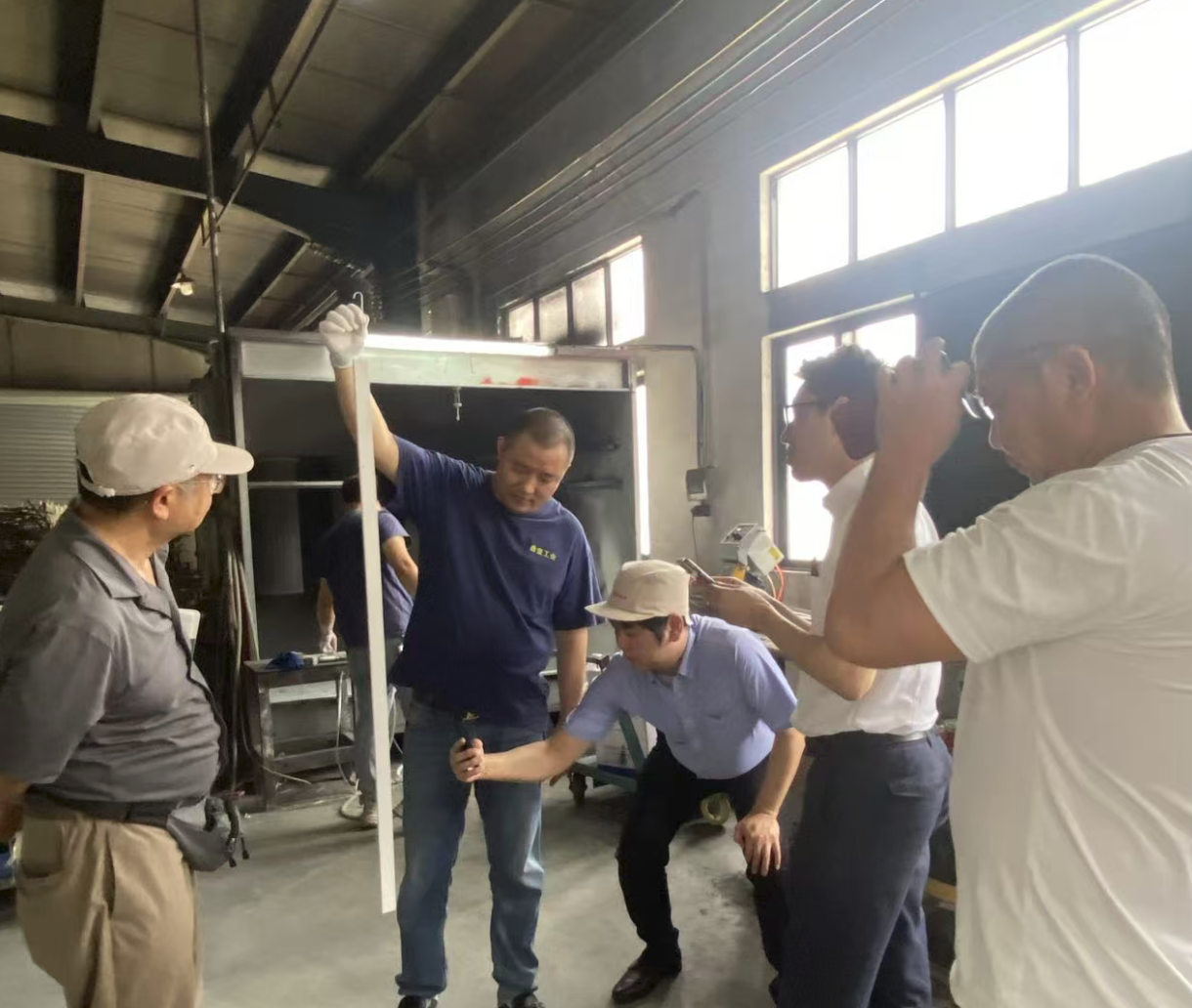
Cutting is an important step in making sheet metal parts. You use cutting to turn raw metal into the shapes you need. Picking the right cutting method gives you smooth, clean edges. It also helps your project stay on schedule. At Foshan Dingyi Industrial Technology Co., Ltd., you find modern machines that make cutting quick and accurate.
Laser cutting is a popular choice for making sheet metal parts. It gives you very smooth edges and high accuracy. Powerful lasers can cut thick metal sheets, even up to 25 mm. This method is good for making enclosures, cabinets, and custom parts. You can make parts quickly and do not need much extra finishing. The table below shows how laser cutting is different from other ways:
Cutting Method | Advantages | Disadvantages |
|---|---|---|
Laser Cutting | High precision, minimal distortion, versatile | High cost, thickness limits |
Waterjet Cutting | No heat zone, clean edges | Slower, higher cost |
Plasma Cutting | Fast, low cost, thick materials | Lower precision, heat distortion |
Shearing | Fast, low cost, straight cuts | Limited thickness, rough edges |
Band Saw Cutting | Versatile, precise, low cost | Slow, tool wear |
CNC Machining | High precision, automation | High setup cost, slow |
The way you cut metal changes how good your parts are. Using the best method gives you better edges and more exact shapes.
Punching and stamping are also big steps in making sheet metal parts. Pneumatic punch presses help you make holes and shapes fast. These presses are faster and easier to control than old stamping machines. You can set them up for many different jobs, which is great for custom work. Here are some good things about them:
You get very accurate parts and less wasted metal.
You can work faster and change jobs quickly.
You have a safer and quieter place to work.
You do not spend as much on fixing machines.
You use punching and stamping to make things like control panels, brackets, and covers. These steps help you make parts for many industries, like home appliances and energy storage.
Tip: Always pick the cutting method that fits your project best. This helps you get the best results when making sheet metal parts.
Bending changes flat metal into strong parts. This step gives metal the right angles and curves. It helps your project fit what the industry needs. These needs include sealing and holding weight. At Foshan Dingyi Industrial Technology Co., Ltd., you find modern machines. These machines make every bend exact and the same each time.
How do you make sure bends are always right? You use CNC press brakes. These machines use computers to control bending. You get the same shape every time, even for hard designs. The table below shows how CNC press brakes help you:
Feature | Benefit |
|---|---|
Computer-controlled programming | Enables precise and repeatable bends |
Multi-step bends | Allows for complex geometries |
Reduced setup times | Increases production speed |
Simplified programming | Improves accuracy and efficiency in bending |
You can pick different bending ways for different jobs. Here are some common ways:
Technique | Description | Contribution to Strength |
|---|---|---|
V-bending | Presses the metal sheet between a punch and a V-shaped die. | Ensures precise angles and prevents cracks. |
U-bending | Forms a U shape using a U-shaped die. | Maintains structural integrity. |
Coining | Uses high pressure for sharp bends. | Creates tight bends for durability. |
Rotary Bending | Uses rotating dies for smooth bends. | Good for consistent patterns. |
Air Bending | Bends the sheet above the die, touching only at the bend point. | Offers versatility and efficiency. |
You pick the best way based on what your part needs. This step gives your product the right shape and strength.
How do you work with big metal parts? You face problems like keeping the right size and picking good material. Skilled engineers and new machines help fix these problems. The table below shows common problems and how to solve them:
Challenge | Solution |
|---|---|
Ensuring correct specifications | Use skilled engineers and advanced techniques for precision. |
Procurement of quality sheet metal | Inspect materials with strict quality control. |
Material selection | Choose materials that fit your application. |
Meeting manufacturing tolerances | Use state-of-the-art equipment for accurate results. |
Many industries need strong, sealed, and load-bearing parts. Using the right bending and forming ways helps you meet these needs every time.
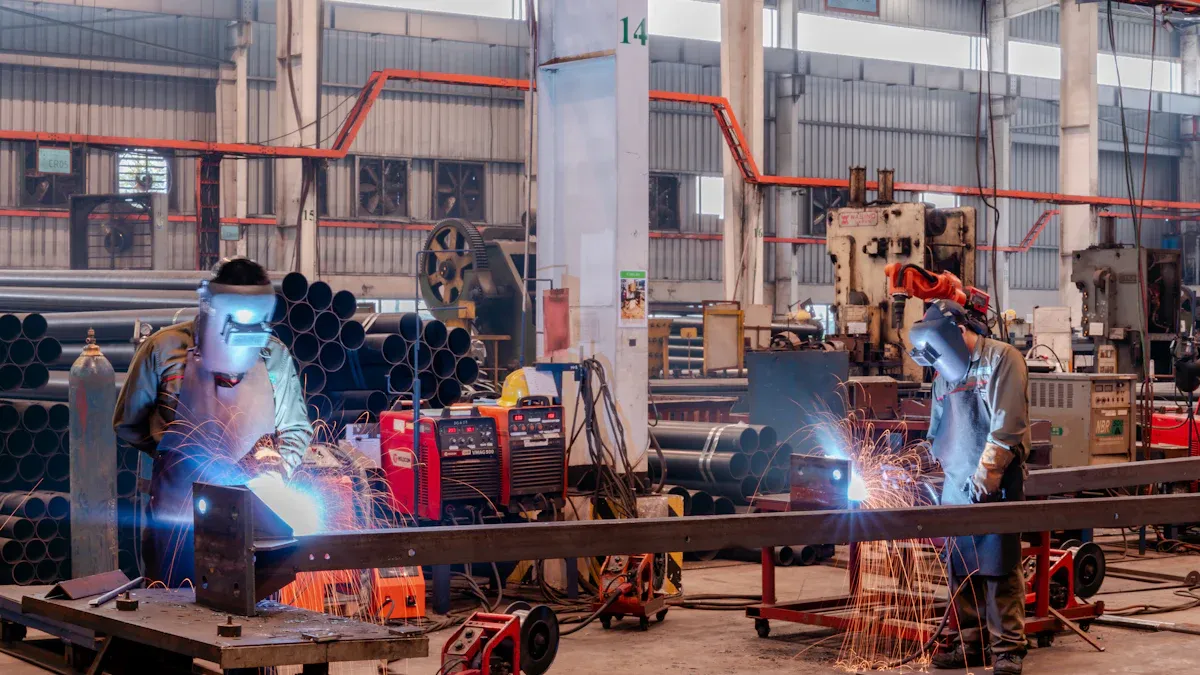
Strong welds are very important in sheet metal fabrication. Robotic welding workstations help make strong welds. These machines use new technology to make each weld exact. You get the same results every time, so your parts are always good. Robotic welding is fast and helps workers not get tired. These machines can also find problems early and keep products safe.
Benefits of robotic welding workstations:
Welds are more accurate and the same each time
Welding is faster
Welds are stronger and better
Workers do not get as tired
Problems are found early
Welds meet industry rules
Checking quality is very important in welding. Every part must pass tough checks. This is extra important for cars and airplanes. Robotic welding helps you finish big jobs fast and meet these rules. It also keeps workers safe from heat and smoke.
There are many ways to join sheet metal parts. Each welding way has its own good points. You should pick the way that fits your job and where it will be used. For outside or shaking places, you need welds that last and do not break.
Welding Technique | Description |
|---|---|
Seam/Fillet Welding | Makes strong welds with a solid bond. These welds do not break and keep water out. They are good for places that shake a lot. |
MIG Welding | Makes strong welds and is faster than TIG. It may not be as good for small, careful parts. |
TIG Welding | Makes clean and strong joints. It is good for thin parts and for outside use. |
You can also use argon arc and laser welding. Laser welding lets you control the heat very well. You can join different metals and make strong bonds. Argon arc welding is used a lot and costs less. It is good for fixing molds and joining stainless steel or aluminum.
Welding Method | Advantages | Applications |
|---|---|---|
Laser Welding | You can control the heat well. It is good for careful work and joining different metals. | Used for strong welding of many metals |
Argon Arc Welding | Used a lot, works for many metals, costs less, and is good for fixing molds | Used for welding stainless steel, aluminum, and more |
You want your welds to last in hard places. Seam and fillet welding keep water out and do not break when things shake. TIG welding is good for thin parts used outside. These ways help your sheet metal parts work well in real life.
Tip: Always pick the welding way that fits your product’s use and stress. This helps you make strong and safe parts.
Surface finishing is an important part of making sheet metal parts. It helps protect metal from rust, weather, and scratches. This step also makes products look nice and smooth. At Foshan Dingyi Industrial Technology Co., Ltd., there are special spray lines. These lines use machines to meet tough rules for safety and quality.
People often use powder coating or painting to finish metal parts. Powder coating puts a thin, even layer on the metal. It uses static electricity to stick powder to the metal. Then, heat makes the powder hard and strong. This finish does not chip easily and can handle bad weather. Painting is another way to finish metal. But powder coating lasts longer and is better for the earth.
Feature | Electrostatic Powder Coating | Traditional Painting |
|---|---|---|
Durability | Smooth, rust-resistant, chip-resistant | Less durable, prone to chipping and rust |
Resistance | High resistance to scratches and chemicals | Less resistant to weather and chemicals |
Environmental Impact | No solvents or VOCs, eco-friendly | Higher VOC emissions |
Dingyi’s spray lines work in clean rooms with no dust. This keeps products smooth and free from mistakes.
There are different ways to give metal extra protection. Powder coating, sand blasting, and metal plating all help metal last longer.
Method | Description | Benefits |
|---|---|---|
Powder Coating | Thin organic film covers the metal | Increases resistance to weather and corrosion |
Sand Blasting | Abrasive material cleans and treats the surface | Makes surfaces more resistant to corrosion |
Metal Plating | Thin film of another metal covers the surface | Enhances durability and corrosion resistance |
You should always choose the best finish for how your product will be used. This step helps your sheet metal parts stay strong and last a long time.
Quality checks are very important in sheet metal fabrication. You want every part to be good before putting it together. Careful inspection helps you find problems early. This way, you do not make expensive mistakes.
There are different ways to find problems in metal parts. Each way has good points and some problems. Here is a table that shows common inspection methods:
Inspection Method | Advantages | Challenges |
|---|---|---|
Coordinate Measuring Machines (CMM) | High accuracy and repeatability | Slow process; may miss surface warping |
Checking Fixtures | Fast and user-friendly for high-volume jobs | Needs new fixtures for each design |
Gray Value Features | Captures surface textures in detail | Complex setup; hard to use on shop floors |
3D Scanning Solutions | Quick data capture; easy to use | Needs careful calibration |
You use these tools to check size, shape, and how the surface looks. Finding problems early helps you fix them before sending parts to customers.
Tip: Always check parts after each big step. This keeps your work smooth and your products good.
You have to follow strict rules in sheet metal fabrication. These rules help you make safe and strong products. You check things like size, thickness, and how the surface looks. You also test if parts are strong and last long.
Use tools to measure size.
Test welds to see if they are strong and do not leak.
Check coatings to make sure they cover well and protect.
Foshan Dingyi Industrial Technology Co., Ltd. follows these rules for every job. You get products that pass hard tests and work well in real life.
Note: Following rules helps your customers trust you. It also helps you avoid returns or repairs.
Final assembly and testing are very important steps. They help make sure your sheet metal project works well and lasts long. You must check every part and system before sending products to customers. This step helps you find problems early. It also keeps your products working well.
How do you make sure all parts work together in smart home devices, energy storage, and HVAC systems? You use special ways to connect and control each part. Here are some ways you help everything work together:
Integrated circuits let devices talk to each other and save energy.
Dynamic load management helps systems use power better.
Wireless communication lets devices work together and react to changes.
Energy monitoring gives you live data to track and manage use.
ICs help connect solar panels and other energy sources to batteries or the grid.
You must make sure every part fits and works with the others. Careful work helps your products run well and meet what customers want.
You need to test each product to make sure it meets the rules. Testing checks if your product works in real life. You look for problems and fix them before you ship. Here is a table with important steps for good assembly and testing:
Step | Description |
|---|---|
Raw Material Inspection | You check materials to make sure they meet your needs. |
Process Control | You watch each step to keep quality high. |
Equipment Maintenance | You take care of machines to stop defects. |
In-Process Inspection | You check parts during production to find problems early. |
Continuous Improvement | You use feedback to make your products better over time. |
You follow these steps to make sure your sheet metal project is strong, safe, and ready to use in smart home devices, energy storage, and HVAC systems.
You now know how sheet metal fabrication works from beginning to end. Every step in the process helps you get strong and dependable products. Foshan Dingyi Industrial Technology Co., Ltd. uses advanced machines for accurate projects. Pick a partner who understands the sheet metal process well.
⭐️ "Dingyi finished our order on time and made it even better than we hoped!"
Are you ready to begin your next project? Reach out to us today.
Stainless steel, aluminum, and cold-rolled steel are used a lot. These materials are strong and do not rust easily. They are also easy to shape for many uses.
Laser cutting makes very exact cuts and smooth edges. This way, you waste less metal and finish parts faster.
Surface finishing keeps metal safe from rust, scratches, and bad weather. It also makes your products look better and last longer.


