
Views: 0 Author: Site Editor Publish Time: 2026-10-15 Origin: Site


High-voltage Electric Vehicle Supply Equipment (EVSE) operates in unforgiving environments. You are putting sensitive power electronics outside, exposed to rain, snow, thermal extremes, and physical abuse. If the physical housing fails, the entire charging station goes down. A poorly manufactured enclosure leads to moisture ingress, catastrophic component failure, voided warranties, and massive downtime for charging networks. Evaluating the long-term viability of an EV charging network requires a deep understanding of how EV Charger Enclosures are fabricated. The manufacturing process dictates the structural integrity and operational lifespan of the unit. We need to look at the exact fabrication methods, material selection, and compliance standards necessary to build resilient, deployment-ready enclosures. This isn't just about bending metal; it is about engineering a survival suit for high-voltage hardware.
Material Selection Dictates Lifespan: The choice between stainless steel, aluminum, and advanced polycarbonates directly impacts thermal performance, corrosion resistance, and unit weight.
Precision Fabrication is Non-Negotiable: Achieving strict NEMA and IP ratings for outdoor deployment requires exact tolerances in CNC machining, welding, and automated gasketing.
Thermal and Electromagnetic Management: High-capacity Level 3 and DC Fast Chargers require enclosures manufactured with integrated cooling channels and EMI/RFI shielding to protect sensitive internal electronics.
Partner Evaluation: Selecting a fabrication partner hinges on their Design for Manufacturability (DFM) capabilities, prototyping speed, and rigorous in-house quality control testing.
Table of Contents
A successful enclosure must meet strict operational benchmarks in the field. Zero moisture ingress is the baseline requirement. Stable internal operating temperatures must be maintained regardless of external weather conditions or internal heat generation. Structural integrity must endure over a lifespan exceeding ten years. Manufacturing defects directly translate to field failures. If a welded seam fails or a gasket degrades under UV light, moisture enters the cabinet. Water on a high-voltage printed circuit board causes short circuits, ground faults, and complete system shutdowns.
EVSE units face constant environmental threats. Rain, snow, and ice accumulation test the limits of external seals and roof panel designs. Coastal deployments expose metal surfaces to continuous salt spray, accelerating galvanic corrosion on untreated surfaces. Prolonged ultraviolet (UV) exposure degrades inferior plastics and powder coatings, causing them to crack, chalk, and flake off. Enclosures must act as an impenetrable barrier against these elements. The manufacturing process must account for water runoff, preventing pooling on top of the unit or around user interfaces like touchscreens and card readers.
High-voltage power conversion generates significant electromagnetic interference (EMI) and radio frequency interference (RFI). When a 350kW DC fast charger ramps up, it creates massive electromagnetic noise. Properly manufactured metal enclosures act as Faraday cages. This shielding works in two directions. First, it protects the sensitive internal control boards and communication modules from external interference. Second, it prevents the charger's high-voltage systems from disrupting nearby electronics, pacemakers, or cellular communication networks. Achieving this requires precise grounding points, conductive gaskets, and continuous electrical conductivity across all metal panels.
Publicly deployed infrastructure attracts tampering, copper theft, and physical abuse. IK (Impact Protection) ratings measure an enclosure's resistance to mechanical impact. Achieving an IK10 rating—which simulates dropping a 5kg steel mass from 400mm—requires thick-gauge materials and strategic internal reinforcement. Structural design deters tampering. Manufacturers utilize hidden hinges, flush-fitting doors with anti-pry lips, and specialized security fasteners. This protects both the user-facing dispenser and the critical EV feeder cabinet components from unauthorized access and blunt force damage.

Modern EVSE fabrication relies on two primary material categories: precision sheet metal and advanced polymers. The selection depends entirely on the charger's power output, deployment location, and target user base. High-power commercial units demand heavy-gauge metal. Residential units often utilize engineered plastics.
Sheet metal dominates the commercial and DC Fast Charging sectors. Each metal alloy offers distinct manufacturing and operational characteristics on the shop floor and in the field.
Aluminum: Aluminum alloys, particularly 5052-H32, are lightweight and naturally corrosion-resistant. Aluminum offers high thermal conductivity, making it excellent for dissipating internal heat generated by power modules. It is easier to machine and bend than steel, reducing tooling wear on punch presses and press brakes.
Stainless Steel: Grades 304 and 316L provide maximum durability and impact resistance. Stainless steel is mandatory for highly corrosive environments, such as marine deployments or areas with heavy winter road salt usage. It carries a high raw material cost and requires specialized tooling to cut and form due to its high tensile strength.
Galvanized Steel: This offers a middle ground. The zinc coating provides baseline corrosion resistance. Galvanized steel requires robust, multi-layer powder coating to survive outdoors. Any deep scratch that penetrates the zinc layer during installation will inevitably lead to rust.
High-impact, UV-stabilized plastics are primarily used for residential or commercial Level 1 and Level 2 chargers. In these applications, housing automatic load management systems and smaller sub-panels is the priority. Polycarbonate (PC) and PC/ABS blends offer excellent dielectric properties, meaning they do not conduct electricity. This simplifies internal insulation requirements. Injection molding allows for complex, ergonomic shapes and high-volume production at a low per-unit cost. The initial tooling and mold costs are substantial, making it viable only for high-volume production runs.
Selecting the right material requires balancing upfront manufacturing costs with long-term field survival. The table below outlines the primary trade-offs encountered during the engineering phase.
Material Specification | Weight Profile | Thermal Conductivity | Corrosion Resistance | Primary Field Application |
|---|---|---|---|---|
Aluminum (5052-H32) | Low (Easy Installation) | High (Excellent Heat Dissipation) | Excellent | Commercial Level 2, DCFC Dispensers |
Stainless Steel (316L) | High (Requires Heavy Equipment) | Low (Requires Active Cooling) | Superior | Coastal Deployments, High-Vandalism Areas |
Galvanized Steel (G90) | High | Moderate | Moderate (Requires Powder Coat) | Inland DCFC Feeder Cabinets |
Polycarbonate Blend | Very Low | Insulator (Traps Heat) | Immune to Rust | Residential Level 2, Indoor Garages |
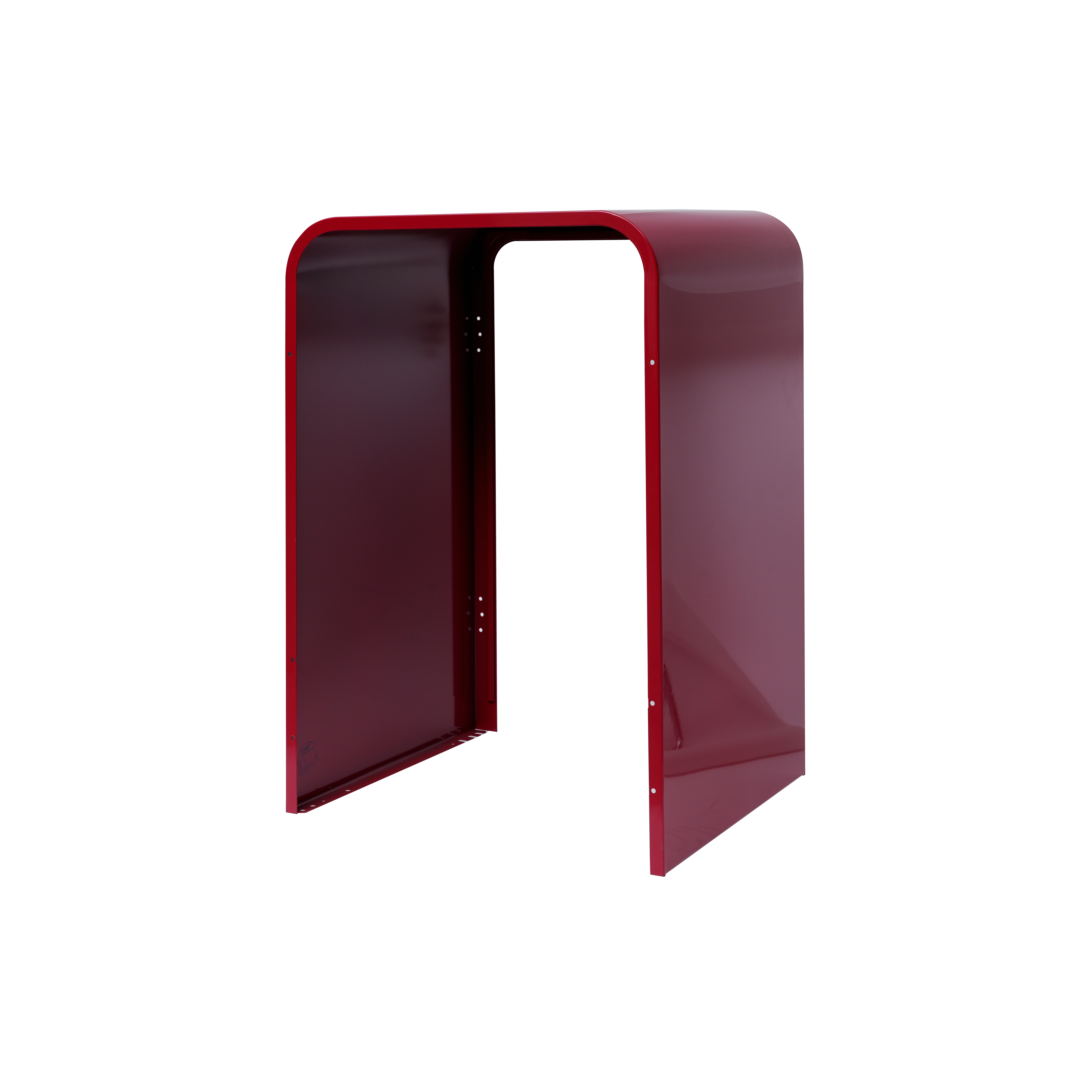
Every step on the factory floor directly influences the final reliability of the enclosure. Tight tolerances prevent water ingress. Clean welds prevent structural fatigue under wind loads. The manufacturing sequence must be strictly controlled to ensure consistency across thousands of units.
Manufacturing begins long before metal is cut. Engineers use Computer-Aided Design (CAD) to build 3D models of the enclosure. Design for Manufacturability (DFM) principles are applied to reduce part counts and eliminate unnecessary welds. Engineers utilize Computational Fluid Dynamics (CFD) and thermal simulation to optimize the enclosure layout. This ensures that heat-generating components are positioned near cooling channels or ventilation louvers.
The engineering requirements differ vastly between components. The user-interactive dispenser requires a sleek footprint, precise cutouts for touchscreens, and reinforced holsters for heavy charging cables. The high-capacity EV feeder cabinet manages the raw current. It requires massive structural reinforcement to support heavy transformers, switchgear, and active cooling systems. The feeder cabinet prioritizes function and thermal mass over aesthetics.
Precision Cutting and Punching: Raw sheet metal is processed using automated cutting machinery. Fiber lasers (typically 4kW to 8kW) offer extreme precision, cutting complex geometries with tolerances as tight as +/- 0.005 inches. This precision is required for screen bezels and tight-fitting doors. CNC turret punch presses are utilized for rapid hole punching and creating ventilation louvers. Punching is highly efficient for creating the exact cutouts required for cable glands, ventilation fans, and mounting hardware without compromising the surrounding structural integrity.
Forming and Bending: Once the flat patterns are cut, the metal moves to forming. CNC press brake operations fold the sheet metal into rigid, three-dimensional structures. Engineers design enclosures to utilize bends instead of welds wherever possible. A continuous bend is inherently stronger and completely waterproof. Minimizing vulnerable weld points reduces the risk of micro-cracks and subsequent moisture ingress.
Welding and Assembly: Where bending is impossible, welding joins the panels. Tungsten Inert Gas (TIG) welding provides clean, precise seams, often used on visible exterior joints to minimize grinding. Metal Inert Gas (MIG) welding offers faster deposition rates for internal structural framing. For high-volume production, robotic spot welding ensures perfect consistency and speed.
Hardware Insertion: During assembly, PEM hardware (clinch nuts, studs, and standoffs) is pressed into the metal using hydraulic rams. This allows internal electronics to be mounted securely without drilling holes through the exterior shell, preserving the watertight seal.
A raw metal box cannot survive outdoors. The final stages of manufacturing transform the fabricated structure into an outdoor-rated enclosure capable of withstanding decades of abuse.
Liquid paint is insufficient for EV infrastructure. Powder coating is the industry standard. Before coating, the metal undergoes a multi-stage pretreatment process. This involves alkaline degreasing, rinsing, and the application of an iron phosphate or zirconium conversion coating. This pretreatment etches the metal, providing a microscopic texture for the powder to grip. Electrostatically charged powder is sprayed onto the grounded enclosure, then baked in an oven at approximately 400°F. The powder melts and cross-links into a continuous, thermosetting polymer layer. This provides exceptional UV resistance and prevents oxidation in harsh environments. A zinc-rich primer is often applied beneath the topcoat for maximum protection.
Sealing the doors and access panels is critical for achieving IP65/IP67 and NEMA 3R/4X ratings. Manual strip gaskets are prone to human error, stretching, and joint failure. Advanced manufacturing utilizes Form-In-Place Foam Gasket (FIPG) technology. A CNC robot dispenses a continuous bead of liquid two-part polyurethane directly onto the enclosure door. The polyurethane expands and cures into a seamless, highly resilient gasket that perfectly matches the door's contours. Specialized waterproof seals and EPDM rubber glands are also installed around cable entry points and display screens to ensure total environmental isolation.
As EV batteries grow larger, chargers must deliver higher wattage. This increases the internal heat load exponentially. Solar loading from direct sunlight further compounds this issue. Enclosures must adapt to these increasing power outputs through integrated thermal management systems.
Level 2 chargers generally rely on passive cooling. The manufacturing process incorporates extruded aluminum heat sinks and stamped louvers to allow natural convection. DC Fast Chargers (DCFC) require active thermal management. The enclosure manufacturing must include structural reinforcement to support the weight and vibration of active HVAC units, compressor-based chillers, or liquid cooling pumps. Internal baffling is fabricated from sheet metal to direct cold air specifically over the hottest power modules, preventing thermal throttling.
Ventilation introduces a paradox: the enclosure must breathe, but water cannot enter. This requires extreme precision when stamping louvers. The angles and depth must deflect driving rain. Manufacturers install hydrophobic filters, such as Gore vents, behind the louvers. These engineered membranes allow air and moisture vapor to pass through, equalizing internal pressure and preventing condensation, while completely blocking liquid water and dust particles.
Rigorous testing prevents costly field failures. A single recalled deployment due to water ingress can bankrupt a charging network operator. Top-tier fabrication facilities integrate quality control at every stage of the manufacturing process.
In North America, EVSE must adhere to strict safety standards. Passing UL 2202 (Standard for Electric Vehicle Charging System Equipment) and UL 2594 requires meticulous manufacturing documentation. Fabricators must maintain complete material traceability. Every batch of steel, plastic resin, and powder coat must be documented. The enclosure must prove it can contain internal fires and prevent users from accessing high-voltage areas.
Leading fabricators do not wait for third-party labs to find flaws. They utilize rigorous in-house testing protocols to validate their manufacturing processes.
Testing Protocol | Industry Standard | Manufacturing Purpose |
|---|---|---|
Salt Spray Testing | ASTM B117 | Exposes coated panels to a corrosive fog to verify powder coat adhesion and rust resistance. |
Impact Testing | IEC 62262 (IK10) | Drops solid steel masses onto the enclosure to verify structural integrity and weld strength. |
Water Ingress Testing | NEMA 250 / IPX5 | Subjects the sealed enclosure to high-pressure water jets to verify FIPG gasket performance. |
Dye Penetrant Inspection | ASTM E1417 | Detects microscopic surface-breaking defects and micro-cracks in welded seams. |
Quality control teams actively hunt for common manufacturing defects on the floor. Uneven powder coat adhesion is tested using cross-hatch adhesion checks and electronic mil-thickness gauges. Dimensional inspections using Coordinate Measuring Machines (CMM) ensure that every mounting hole aligns perfectly with the internal electronics. Catching these defects on the factory floor prevents catastrophic failures in the field.
Procurement teams must look beyond the lowest per-unit price. Selecting a manufacturing partner requires evaluating their engineering depth, quality control infrastructure, and production capacity.
The EV market moves rapidly. A competent partner must offer rapid prototyping. They should be able to turn a CAD file into a physical, testable unit within weeks using soft tooling. This allows engineers to refine designs, test thermal performance, and verify ergonomics before committing to expensive mass production hard tooling.
Fabricators should act as an extension of your engineering team. Evaluate if the partner understands the nuances of electromagnetic shielding. Do they know how to design conductive gaskets for EMI containment? Do they understand the thermal dynamics of high-voltage rectifiers? A partner with specific experience in both residential and commercial EVSE will catch design flaws before they reach production.
A successful charging network will scale rapidly. The fabrication partner must scale alongside it. Evaluate their floor space and equipment. Can they handle a low-volume pilot run of 50 units, and then transition to a mass production run of 5,000 units using automated robotic welding cells? Assess their supply chain resilience to ensure they can source raw sheet metal consistently during global shortages.
To ensure your infrastructure survives the elements and meets deployment schedules, take the following actions:
Audit your current enclosure specifications against the environmental realities of your deployment sites, specifically checking NEMA ratings and material gauges.
Request a comprehensive DFM review from a qualified sheet metal fabricator to identify cost-saving bend substitutions and structural improvements.
Initiate a prototype run to physically validate thermal management, airflow CFM, and weatherproofing before committing to mass deployment.
Establish strict quality control and material traceability requirements in your vendor contracts to guarantee long-term UL compliance.
A: Aluminum (specifically 5052 grade) is highly recommended for commercial outdoor units due to its excellent thermal conductivity and natural corrosion resistance. It keeps the overall unit weight manageable for installation crews. For extreme environments, such as coastal areas with heavy salt exposure or high-vandalism urban centers, stainless steel (grade 316L) offers unmatched durability and impact resistance.
A: Outdoor EV charging stations generally require a minimum of a NEMA 3R rating. This specification protects internal components from falling dirt, rain, sleet, and snow. For harsher environments involving windblown dust or hose-directed water, NEMA 4 is required. NEMA 4X adds superior corrosion resistance, making it mandatory for coastal deployments or areas utilizing heavy winter road salts.
A: The dispenser is the user-facing unit containing the charging cables, touch screens, and payment terminals. It prioritizes ergonomics and aesthetics. The feeder cabinet is a separate, larger enclosure that houses the heavy power electronics, transformers, and current control systems. Feeder cabinets require massive structural reinforcement, heavy-gauge metal, and advanced thermal management compared to the lighter dispenser units.
A: Thermal management dictates the entire structural design of the cabinet. Manufacturing must include precise custom cutouts for exhaust fans and heavy structural reinforcement to support the weight and vibration of active HVAC units. Fabricators must also execute the exact stamping of ventilation louvers. Hydrophobic vents are integrated into the sheet metal to allow heat to escape while blocking moisture ingress.
A: Level 2 enclosures are often simpler, utilizing injection-molded polycarbonates or light-gauge sheet metal with passive cooling. DC Fast Chargers require complex, multi-cabinet sheet metal structures. They demand active liquid cooling systems, heavy EMI shielding, and significant structural reinforcement to house high-voltage components safely. The manufacturing tolerances for DCFC units are significantly tighter to ensure total environmental sealing.
A: A custom enclosure typically takes 8 to 12 weeks from the initial CAD concept to a physical, testable prototype. Once the prototype is validated in the field and Design for Manufacturability (DFM) adjustments are finalized, transitioning to full mass production usually requires an additional 4 to 8 weeks. This timeline depends heavily on custom tooling requirements and raw material availability.


