
Views: 0 Author: Site Editor Publish Time: 2025-10-24 Origin: Site


Argon arc welding lets you join metals using heat and a powerful electric arc. You need a shielding gas to keep the weld clean and strong. Argon works well because it protects the weld area from air. This helps you avoid problems like rust or weak spots. When you use argon, you also improve safety for both the welder and the finished product. Many industries, such as Foshan Dingyi Industrial Technology Co., Ltd., rely on this method for making precise and durable metal parts. You should always pay attention to shielding gas and safety when working with metal.
Argon arc welding joins metals with heat and an electric arc. This method is very exact and makes strong welds.
Argon is a shielding gas that stops oxidation. This keeps the welds clean and strong. It also stops rust and weak spots.
You can control the welding by changing things like current, voltage, and travel speed. This helps you get the best welds.
Pick the right tungsten electrode and filler material for the metal. This helps make the welding work well.
Argon welding can be used in many jobs. It is used in aerospace, electronics, and cars. It gives high-quality results.
Argon arc welding joins metal parts using heat and an electric arc. People also call this process tig, which means tungsten inert gas welding. Tig is very precise compared to other welding methods. A tungsten electrode makes the arc. The electrode does not melt while you weld. It helps control the heat and the melted metal. Argon gas covers the weld area. The argon keeps air away from the hot metal. This stops rust, weak welds, and dirt from getting in. Tig is used in places that need clean and strong welds. One example is making sheet metal at Foshan Dingyi Industrial Technology Co., Ltd.
Tip: Tig is great for welding thin metals or making neat seams. Argon welding gives you smooth and high-quality welds.
You need to know some science ideas when you use tig and argon welding. These ideas help you make strong welds that last. The table below shows the main things about argon arc welding:
Principle Type | Description |
|---|---|
Heat Generation | You make heat by using electricity or an arc. This melts the metal where you want to join it. |
Electricity in Welding | You create an electric arc between the electrode and metal. The arc gets very hot, following Ohm’s law. |
Thermal Expansion | Metal gets bigger when hot and smaller when cool. You must control this so the metal does not bend. |
Oxidation Prevention | Argon keeps air away from the weld and stops oxidation. |
Metallurgical Changes | Welding changes how metal is inside. Good welding makes metal stronger and more flexible. |
Tig uses a strong electric current to melt metal and filler wire. You make a melted pool that joins the base metal and filler. Argon gas protects the melted pool from air. Oxygen cannot reach the weld, so the metal stays clean and strong. Tig is not like other welding methods. You can control the heat and the shape of the weld. Tig lets you weld thin pieces, pipes, and tricky shapes.
Argon has special features that make it good for tig and argon welding. The table below shows why argon works well:
Characteristic | Description |
|---|---|
Density | Argon is 25% heavier than air. This gives better protection and uses less gas. |
Chemical Inactivity | Argon does not react with hot metal. This stops rust and dirt from forming. |
Ionization Potential | Argon needs a lot of energy to start the arc. Once started, the arc stays steady. |
Many industries use tig because it makes clean welds and strong joints. Argon welding is the best choice for making robot cabinets, safety boxes, and data cabinets at Foshan Dingyi Industrial Technology Co., Ltd. Tig gives you good results every time.
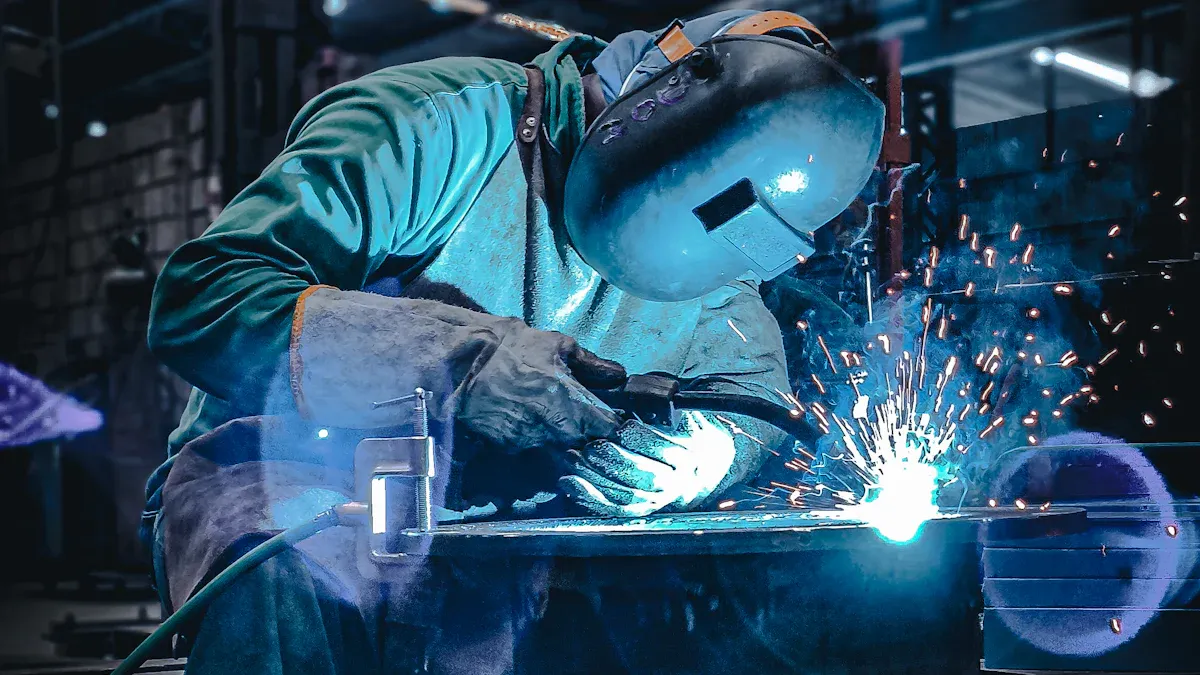
You can follow a clear sequence when you use argon arc welding. Each step in the welding process helps you create strong and clean joints. Here is a simple guide:
Set up your equipment. Connect the welding machine to a power source. Attach the torch and ground clamp. Adjust the argon flow to about 10–20 cubic feet per hour.
Prepare your materials. Clean the metal surface to remove oil, rust, or dirt. Secure the workpiece with clamps for stability and safety.
Start the weld. Hold the tungsten electrode about 1/8 inch from the metal. Begin the arc. Move the torch along the joint. Add filler material if needed to build up the weld.
You control important parameters during the welding process. The table below shows what you need to watch:
Parameter | Description |
|---|---|
Welding Current | Controls how much metal melts and how deep the weld goes. |
Welding Voltage | Sets the arc length and affects the weld bead shape. |
Travel Speed | Changes the heat input and how much the weld penetrates. |
Tip: Always check your settings before you start. This helps you get the best results and improves safety.
Argon plays a key role as the shielding gas in the welding process. You need argon to protect the weld area from air. Here is how argon helps you:
Argon pushes away oxygen. This stops oxidation and keeps the weld shiny and strong.
Argon blocks nitrogen. This prevents unwanted reactions that can weaken the weld.
Argon keeps hydrogen out. This reduces the risk of cracks and brittle spots.
Argon forms a protective bubble around the weld. This keeps the weld pool clean and free from contamination.
If you do not use enough shielding gas, you may see problems like porosity, cracks, or an unstable arc. Always make sure the argon flow covers the weld zone. This ensures safety and high-quality results every time you use argon arc welding.
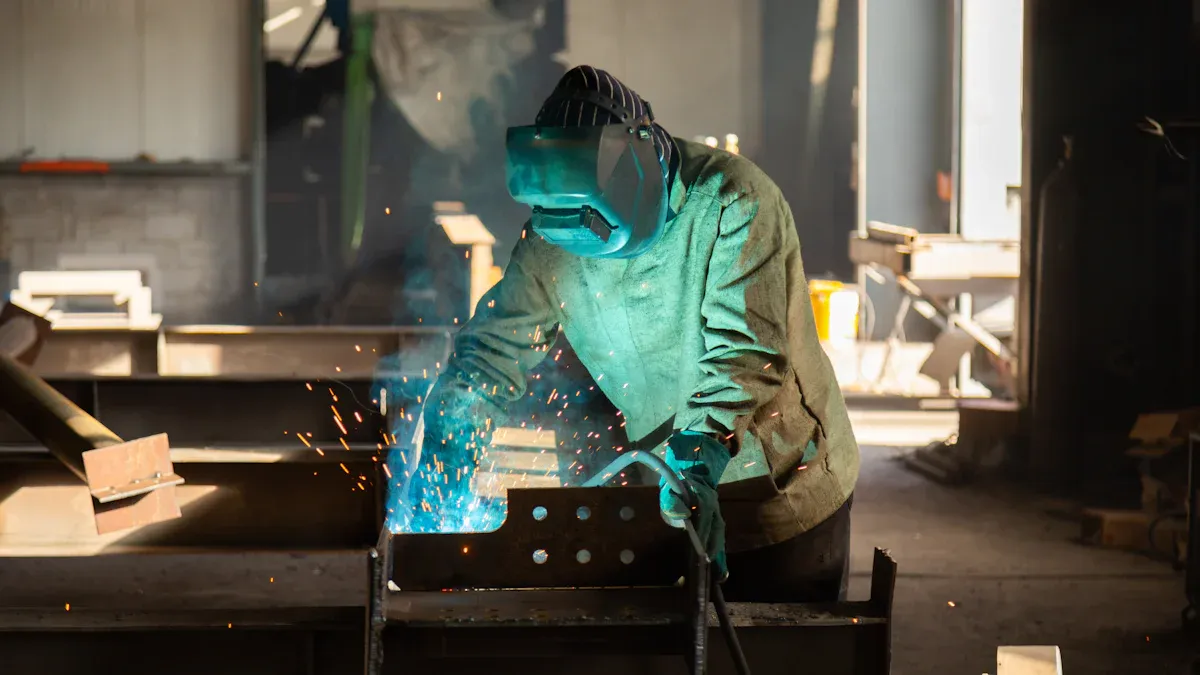
You need a good welding machine for argon arc welding. Gas Tungsten Arc Welding machines are known for making neat welds. These machines use a tungsten electrode that does not melt. Argon gas protects the weld area from air. You can pick machines with different power levels. Some machines, like the MASTERTIG-500CT, work with both thin and thick metals. They have a wide range of power and can run for a long time. The table below lists important parts of welding machines:
Component | Description |
|---|---|
Power Supply | Gives the energy needed for welding. |
Ground Cable | Finishes the electric circuit. |
Welding Gun | Points the arc and adds filler metal. |
Protective Gas Tank | Holds argon gas to protect the weld. |
Water Cooling Unit | Optional, cools the machine during long jobs. |
Tip: Check the power and cooling before you start. This helps you keep the weld steady and stops the machine from getting too hot.
You need to pick the right electrode and filler for argon arc welding. Tungsten electrodes come in different types. Pure tungsten is used for simple jobs. Zirconium tungsten works best for aluminum. Thoriated tungsten gives a steady arc and lasts longer. This makes your welds better. The table below shows common electrode types:
Electrode Type | Description |
|---|---|
Pure Tungsten Electrodes | Do not melt, work with low power, good for easy jobs. |
Zirconium Tungsten Electrodes | Have zirconium, best for aluminum and use with changing current. |
Thoriated Tungsten Electrodes | Have thorium, give a steady arc and last longer. |
You can use filler rods like ER70S-6 for steel or ER4043 for aluminum. The filler you pick changes how deep the weld goes and how strong it is. Filler with reverse polarity goes deeper. Straight polarity makes shallow welds. The elements in the filler also change the weld, so check them before you choose.
You need very pure argon gas to keep the weld safe from dirt. Things like oxygen, nitrogen, or water can make welds weak. Pure argon keeps the weld clean and stops rust. Stainless steel and special metals need even cleaner argon. You can give argon gas in two main ways:
A set pressure with a fixed hole gives a steady flow. This is good for jobs that do not change.
Adjustable holes use a flowmeter, so you can change the gas flow.
Note: Always use the right amount of argon gas. This keeps the arc steady and stops problems in your weld.
If you pick argon for tig, you get many good things. Argon arc welding is special because argon makes the arc steady. It keeps the weld pool clean. You can trust argon welding to make strong and shiny welds. Argon does not react with hot metal. This stops rust and keeps dirt away. Tig is great for careful jobs because of this.
Here are some main benefits of argon welding:
Tig gets a steady arc with argon. This helps you make smooth welds.
Less oxidation means your welds stay strong and do not break.
Argon costs less than other gases. You use less gas because it is heavy.
You can control tig well for thin metals and hard shapes.
There is little spatter, so you clean up less after welding.
Tip: Argon gas saves you time and money. You do not need much cleaning after tig. You get better welds with less work.
The table below shows how argon helps your welding:
Benefit | Description |
|---|---|
Cost Reduction | Argon mixes lower your costs for welding. |
Improved Weld Quality | Tig with argon gives you good welds in many ways. |
Reduced Spatter | Argon welding means less mess and easy cleaning. |
Enhanced Deposition Efficiency | You waste less wire, so you work faster and save more. |
You might wonder how argon is different from other gases for tig. Argon welding gives you a steadier arc and costs less than helium or carbon dioxide. Argon covers the weld pool better because it is heavier. You use less gas and get cleaner welds.
The table below shows the differences:
Gas Type | Cost Comparison | Weld Quality | Additional Notes |
|---|---|---|---|
Helium | Costs more | Can cause holes in welds | Uses more gas, can burn, arc is less steady in tig |
Argon | Costs less | Steady arc, clean welds | Uses less gas, does not burn, best for tig and argon arc welding |
Here are more reasons to use argon welding:
Argon costs less than helium, so you save money.
You use less argon because it is heavy and covers well.
Argon gives tig a steady arc, so welds are smooth.
Safety is important when you use any shielding gas. Argon does not burn, so your workspace is safer. You should keep argon in marked, safe containers. Make sure your area has fresh air. Always wear gloves, a helmet, and safety clothes for tig and argon arc welding. These steps keep you safe and protect your welds.
Note: OSHA and AWS rules say you must store and use gases safely. Argon helps you follow these rules and keeps your workspace safe.
You can trust argon welding for strong and clean welds. Tig with argon gas gives you control, safety, and good results every time.
Argon welding is used in many industries that need careful work. In aerospace, tig joins parts of planes and engines. Small errors can be dangerous, so welds must be clean and strong. In electronics, tig helps make tiny parts for gadgets and microchips. Argon gas keeps these jobs safe from air.
You also see argon arc welding in car work. Tig welds exhausts, frames, and custom car parts. This way gives neat seams and follows safety rules. In building, tig joins steel for buildings and bridges. These welds are strong and do not rust.
At Foshan Dingyi Industrial Technology Co., Ltd., we use argon welding a lot. Our team works on sheet metal, machines, and special cabinets. We use tig for robot cabinets, charging stations, and fire boxes. Our argon gas keeps every weld clean and safe. You can trust our metal work and smart machines to fit your needs.
Tip: Argon welding is great for jobs that need careful work, like medical tools and high-tech gadgets.
Choosing argon welding gives you many good things. Argon gas keeps air away, so welds do not rust or get weak. You see fewer mistakes and less mess because tig makes smooth welds. Argon arc welding lets you control the arc, so you can work on thin or tricky shapes.
Here are some main advantages:
Argon stops dirt and rust, so welds stay strong.
Tig with argon makes a steady arc for neat welds.
You clean up less because argon welding has little mess.
Argon gas works for many metals, like steel and aluminum.
You finish faster since you do not redo bad welds.
The table below shows how argon welding helps your work:
Benefit | Description |
|---|---|
Improved Control | Argon gives a steady arc for neat welds. |
Cleaner Welds | You see less mess and better seams. |
Stronger and Consistent Welds | Argon keeps out air, so welds are tough. |
Reduced Rework | Good welds mean you fix fewer mistakes. |
Increased Efficiency | You save time with faster, cleaner welding. |
At our company, we use argon arc welding to make strong products for home, robots, and factories. Our way makes sure every weld is strong and looks good. You can count on us for tough and careful work in every job.
You have learned that argon arc welding uses a steady electric arc. Argon gas protects the weld and helps make it strong. This keeps the weld from having problems and makes it last longer. Look at the table below to see the main benefits:
Benefit | Description |
|---|---|
Greater Precision and Control | Lets you make detailed welds and lowers mistakes. |
Versatility in Applications | Works with many metals, so it is used in many places. |
Suitability for High-Strength | Good for strong and light materials. |
If your project needs careful work and strong welds, try argon arc welding. Find more ways to use it with Foshan Dingyi Industrial Technology Co., Ltd.
You use argon arc welding with a tungsten electrode. Gas metal arc welding uses a wire electrode. Argon arc welding gives you more control for thin metals. Gas metal arc welding works faster for thicker materials.
You can use argon arc welding on many metals like steel, aluminum, and copper. Some metals need special settings or filler rods. Always check the metal type before you start.
Gas tungsten arc welding (also called gtaw welding) uses a tungsten electrode and gives you precise welds. Gmaw welding uses a wire that melts into the joint. You get cleaner welds with gtaw welding, but gmaw welding is faster for big jobs.
Shielding gas protects the weld from air. Argon keeps out oxygen and nitrogen. This stops rust and weak spots. You get stronger and cleaner welds.
You see argon arc welding in factories, car shops, and electronics. Foshan Dingyi Industrial Technology Co., Ltd. uses this method for robot cabinets, charging stations, and fire boxes. You get strong, neat welds for many products.


