
Views: 0 Author: Site Editor Publish Time: 2026-03-11 Origin: Site


Metal forming is a critical process in the manufacturing industry, transforming raw metal into usable shapes and components. From car parts to industrial machinery, metal forming processes are essential in producing parts with high precision and functionality. The ability to form metals into various shapes without significantly altering their material properties is a key advantage for industries worldwide.
This article will explore the definition of metal forming, the different types involved, the processes used, and their significance in modern manufacturing. Understanding these processes is crucial for anyone involved in engineering, manufacturing, or material sciences.
Metal forming refers to a group of manufacturing processes that alter the shape and size of metal workpieces without changing their material properties. This is done by applying force to the metal, causing it to deform plastically (permanently), while maintaining its integrity and strength.
Unlike machining, which removes material to achieve the desired shape, metal forming reshapes the material by compressing, stretching, or bending it. These processes are widely used for producing metal parts with high precision, strong mechanical properties, and minimal material waste.
The most essential feature of metal forming is that it requires less material wastage compared to other manufacturing techniques like casting or machining. The workpiece is usually in the form of a sheet, rod, or billet, and after the forming process, it can take various shapes like tubes, panels, or custom industrial components.
Plastic Deformation: Metal forming utilizes plastic deformation, where the metal changes shape permanently under the influence of applied forces.
Forming without Removal: Unlike machining, metal forming does not involve cutting or removing material but instead reshapes it.
Work-Hardening: Some metal forming processes can increase the hardness of the material through work hardening, making it stronger and more durable.
Cold metal forming refers to processes that are conducted at room temperature or below. Cold forming generally results in higher strength and surface finish, as the metal workpiece does not experience excessive heat that could weaken the material. The key advantage of cold metal forming is the precise dimensional control and surface quality it provides.
Stamping: Metal stamping involves cutting or shaping flat metal sheets using dies. It is used for manufacturing components like car body panels, electrical components, and household appliances.
Bending: The process of bending involves applying a force to the metal, creating a permanent curve. This is commonly used for parts like brackets and frame structures.
Deep Drawing: This process transforms flat metal sheets into deeper and more complex shapes, often used for producing cylindrical and cup-shaped items.
Hot metal forming processes are performed at elevated temperatures, which make the metal more malleable and easier to shape. The advantage of hot forming is that it reduces the amount of force needed to shape the metal. However, controlling the temperature is critical in ensuring that the material does not lose its integrity.
Forging: In hot forging, a metal workpiece is heated to high temperatures and then shaped using dies or hammers. This process is commonly used in producing strong, durable parts like crankshafts, gears, and industrial tools.
Hot Rolling: Hot rolling involves passing a metal through rollers at high temperatures to reduce its thickness. This is typically used to create large metal sheets or plates for structural and engineering purposes.
Casting: While technically not a metal forming process in the traditional sense, casting is often associated with hot metal processing, where molten metal is poured into molds to create parts.
Warm metal forming is a hybrid process that takes place at temperatures between those used in cold and hot forming. It combines the benefits of both, providing a balance between ease of forming and strength of the material.
Temperature Range: The temperature range for warm forming is typically between 300°C and 700°C.
Common Materials: Metals like aluminum, copper, and some steels are well-suited for warm forming.
Process Benefits: The processes result in a reduction in energy consumption and material deformation compared to hot forming, while still improving formability.
Rolling is one of the most widely used metal forming processes. In rolling, the metal workpiece is passed between rollers that compress and elongate it into thinner sheets or plates.
Flat Rolling: The process involves reducing the thickness of metal sheets. It is typically used to produce thin metal sheets or strips.
Section Rolling: Section rolling is used to shape metal into beams, angles, or other structural profiles. This process is essential in construction and structural applications.
Rolling Process | Description | Application |
Flat Rolling | Reduces metal thickness to form sheets or strips. | Automotive body panels, roofing sheets |
Section Rolling | Shapes metal into beams, angles, and channels. | Construction, infrastructure |
Forging is a metal shaping process in which a metal workpiece is subjected to compressive forces, typically while heated, to change its shape.
Open-Die Forging: Involves deforming the metal between two flat dies. It is typically used for larger components.
Closed-Die Forging: The metal is shaped between two dies that completely enclose the material. This results in more precise shapes and is commonly used in manufacturing components like gears and shafts.
Extrusion is the process of forcing a metal billet through a die to create a desired cross-sectional shape. This process is ideal for producing long, uniform parts such as pipes, rods, or custom structural profiles.
Aluminum: One of the most common materials extruded due to its malleability and strength.
Copper: Often used for electrical components.
Steel: Used for heavy-duty applications like beams and construction materials.
Drawing is a metal forming process in which metal is pulled through a die to reduce its diameter and increase its length. It is most commonly used for producing wires, tubes, and other elongated metal products.
Wire Drawing: Involves reducing the diameter of a metal rod to create wire.
Deep Drawing: Involves drawing a flat metal sheet into a cup or cylindrical shape.
Sheet metal forming processes are used to shape metal sheets into components of various shapes and sizes. These processes include stamping, bending, and punching.
Stamping: Involves pressing a metal sheet into a die to form shapes.
Punching: A process where holes are punched into metal sheets for electrical panels or mechanical components.
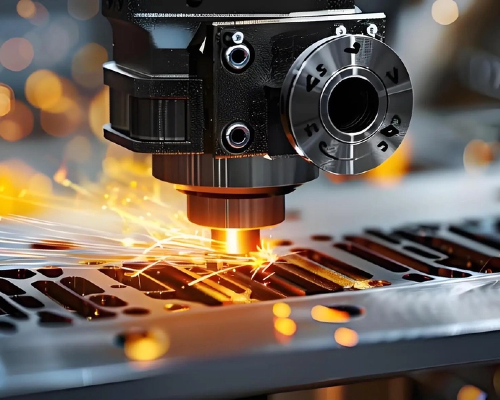
The role of metal forming is indispensable in manufacturing as it directly impacts product quality, material utilization, and cost-efficiency. By utilizing metal forming techniques, industries can create precise, strong components with minimal material waste.
Metal forming enhances the strength of the material through processes like work hardening, which increases the material's tensile strength and fatigue resistance.
Automotive Industry: Creating lightweight yet strong components for vehicles.
Aerospace: Manufacturing high-performance parts for aircraft.
Electronics: Producing components with high precision for electrical systems.
Several factors determine the success and quality of a metal forming process, including material selection, temperature, strain rate, and equipment capabilities.
Material Selection: Different metals require different forming processes. For example, aluminum is commonly cold-formed, while steel may require heating for better formability.
Temperature Control: The temperature at which the metal is processed greatly affects its workability. For instance, hot forming requires higher temperatures to reduce the material’s resistance to deformation.
Strain Rate: The speed at which the material is deformed can influence its final properties.
In conclusion, metal forming is a fundamental process in modern manufacturing, enabling the production of high-precision and durable components used across various industries. By understanding the different types and processes involved, manufacturers can select the most suitable techniques to meet their production needs, whether it’s for automotive, aerospace, or electronics.
At Foshan Dingyi Industrial Technology Co., Ltd., we specialize in offering advanced metal forming solutions, providing high-quality products through our state-of-the-art facilities and expertise. Whether you require precision sheet metal fabrication, forging, or extrusion, our team is ready to assist you in achieving your manufacturing goals with efficiency and excellence.
If you're looking for a trusted partner to help with your metal forming needs, we invite you to contact us to discuss how we can support your business with our innovative solutions. We look forward to collaborating with you to bring your projects to life.
Common materials used in metal forming include aluminum, steel, copper, brass, and titanium, depending on the forming process and the desired properties of the final product.
Yes, metal forming is versatile and can be used for both high-volume mass production and custom small-batch manufacturing, depending on the complexity and size of the parts.
Hot forming involves processing metals at high temperatures, which makes them more malleable and easier to shape. Cold forming occurs at room temperature and results in stronger parts due to work hardening.
Yes, metal forming processes like stamping, forging, and extrusion can produce both simple and complex shapes with high precision and minimal material waste.
The main advantages include reduced material wastage, increased material strength, precision, and the ability to produce intricate and durable components.


