
Views: 0 Author: Site Editor Publish Time: 2025-11-04 Origin: Site


In the realm of sheet metal welding services, the choice between MIG (Metal Inert Gas) and TIG (Tungsten Inert Gas) welding is pivotal. Both methods have their unique advantages and limitations, making them suitable for different applications. This article delves into the intricacies of MIG and TIG welding, comparing their efficacy in sheet metal applications. By examining factors such as precision, speed, and cost-effectiveness, we aim to provide a comprehensive understanding of which method is superior for specific sheet metal tasks.
MIG welding, also known as Gas Metal Arc Welding (GMAW), is a process that utilizes a continuous wire feed as an electrode and an inert or semi-inert gas mixture to shield the weld from contamination. It is renowned for its speed and ease of use, making it a popular choice in industrial applications. The process is particularly effective for thicker materials, where high deposition rates are required. MIG welding's versatility extends to various metals, including aluminum, stainless steel, and carbon steel, making it a staple in the sheet metal welding process.
The primary advantage of MIG welding is its speed. The continuous wire feed allows for rapid welding, significantly reducing production time. Additionally, MIG welding is relatively easy to learn, making it accessible for operators with varying skill levels. The process is also highly adaptable, capable of welding in all positions and on a wide range of materials. This adaptability is crucial in industries where diverse welding requirements are common.
Despite its advantages, MIG welding is not without its limitations. The process is less effective for thin materials, as the high heat input can lead to burn-through. Additionally, the need for shielding gas makes it less suitable for outdoor applications where wind can disperse the gas, leading to weld defects. Furthermore, while MIG welding is versatile, it does not offer the same level of precision as TIG welding, which can be a critical factor in applications requiring high-quality welds.
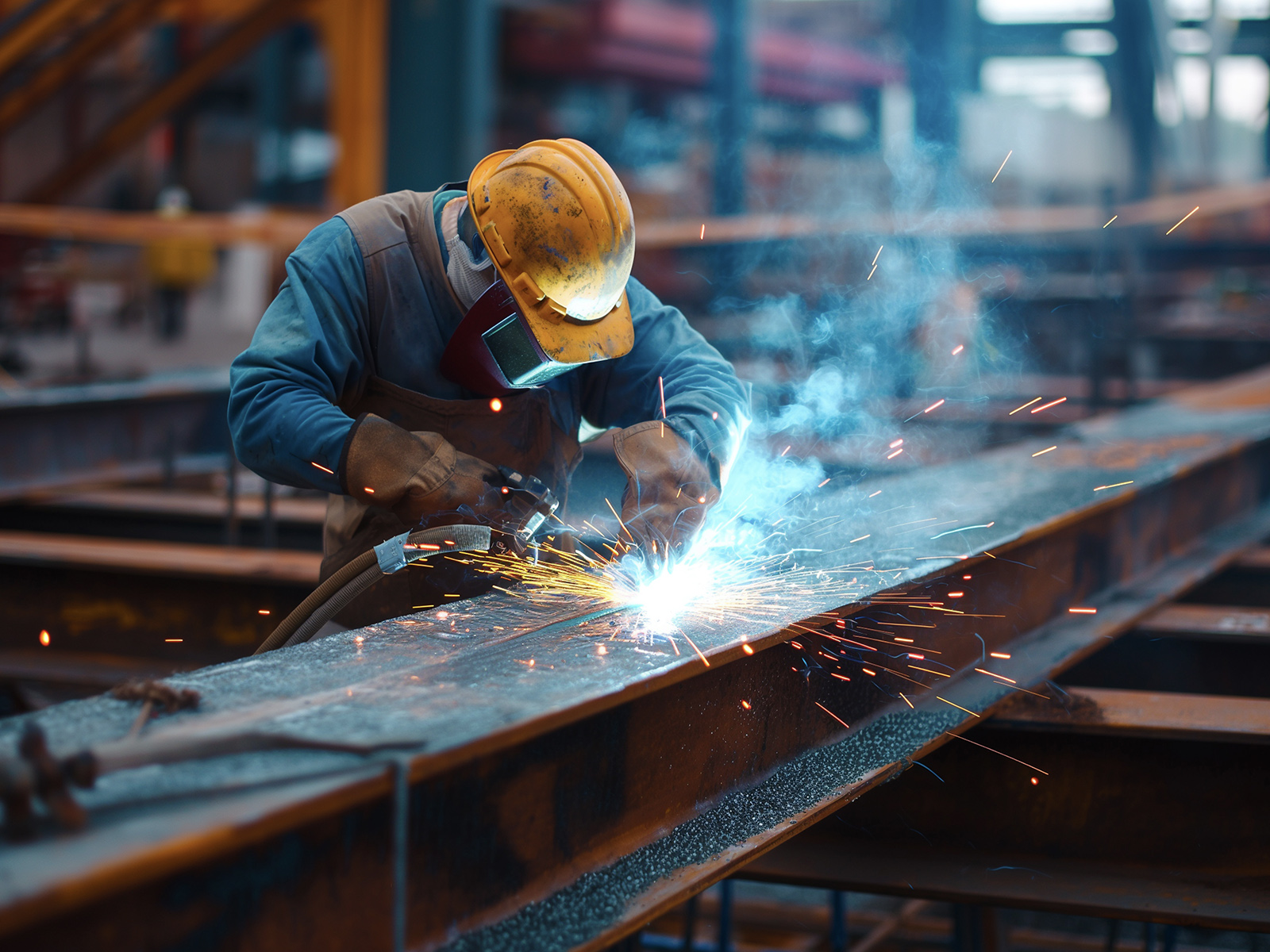
TIG welding, or Gas Tungsten Arc Welding (GTAW), is a process that uses a non-consumable tungsten electrode to produce the weld. It is known for its precision and control, making it ideal for applications requiring high-quality welds. TIG welding is particularly effective for thin materials, where precision and control are paramount. This method is often used in industries such as aerospace and automotive, where the quality of the weld is critical.
The primary advantage of TIG welding is its precision. The process allows for precise control over the heat input and weld pool, resulting in high-quality welds with minimal defects. TIG welding is also versatile, capable of welding a wide range of materials, including thin and delicate metals. Additionally, the process does not require a shielding gas, making it suitable for outdoor applications. This versatility and precision make TIG welding a preferred choice for applications where weld quality is paramount.
While TIG welding offers numerous advantages, it also has its limitations. The process is slower than MIG welding, making it less suitable for high-volume production. Additionally, TIG welding requires a higher skill level, as the operator must manually feed the filler material into the weld pool. This complexity can increase labor costs and training requirements. Furthermore, TIG welding is less effective for thicker materials, where high deposition rates are required.
When comparing MIG and TIG welding for sheet metal applications, several factors must be considered. These include precision, speed, cost, and material compatibility. MIG welding is generally faster and more cost-effective, making it suitable for high-volume production. However, TIG welding offers superior precision and control, making it ideal for applications requiring high-quality welds.
In terms of precision and quality, TIG welding is the superior choice. The process allows for precise control over the heat input and weld pool, resulting in high-quality welds with minimal defects. This precision is particularly important in industries such as aerospace and automotive, where weld quality is critical. In contrast, MIG welding, while versatile, does not offer the same level of precision, making it less suitable for applications requiring high-quality welds.
In terms of speed and efficiency, MIG welding is the clear winner. The continuous wire feed allows for rapid welding, significantly reducing production time. This speed makes MIG welding ideal for high-volume production, where efficiency is paramount. In contrast, TIG welding is slower, making it less suitable for high-volume production. However, the precision and quality of TIG welding can offset the slower speed in applications where weld quality is critical.
Cost is another important factor to consider when choosing between MIG and TIG welding. MIG welding is generally more cost-effective, as the process is faster and requires less skilled labor. This cost-effectiveness makes MIG welding a popular choice for high-volume production. In contrast, TIG welding, while offering superior precision and quality, is more expensive due to the slower speed and higher skill requirements. However, the higher cost of TIG welding can be justified in applications where weld quality is critical.
In conclusion, the choice between MIG and TIG welding for sheet metal applications depends on several factors, including precision, speed, cost, and material compatibility. MIG welding is generally faster and more cost-effective, making it suitable for high-volume production. However, TIG welding offers superior precision and control, making it ideal for applications requiring high-quality welds. Ultimately, the choice between MIG and TIG welding will depend on the specific requirements of the application. For those seeking comprehensive sheet metal welding services, our sheet metal welding machine offerings provide tailored solutions to meet diverse needs.
1. What is the main difference between MIG and TIG welding?
MIG welding uses a continuous wire feed and is faster, while TIG welding uses a non-consumable tungsten electrode for precision.
2. Which welding method is better for thin materials?
TIG welding is better for thin materials due to its precision and control.
3. Can MIG welding be used outdoors?
MIG welding is less suitable for outdoor use due to the need for shielding gas, which can be dispersed by wind.
4. Is TIG welding more expensive than MIG welding?
Yes, TIG welding is generally more expensive due to its slower speed and higher skill requirements.
5. Which method is more suitable for high-volume production?
MIG welding is more suitable for high-volume production due to its speed and cost-effectiveness.
6. What industries commonly use TIG welding?
Industries such as aerospace and automotive commonly use TIG welding for its precision and quality.
7. How does the choice of welding method affect the final product?
The choice affects precision, speed, cost, and the overall quality of the weld, impacting the suitability for specific applications.


